
Bílá Voda: Hotels and Accommodations
Accommodation in Bílá Voda
Culture and History
The cemetery of the religious sisters in Bílá Voda has been protected as a cultural monument since 2000. More than 700 religious sisters from many different orders and congregations are buried there. After the end of communist rule, the cemetery became an important pilgrimage and memorial site.
The Piarist Gymnasium and College in Bílá Voda was the first Piarist college in Silesia. The Piarist seminary in Bílá Voda was a center for music concerts and theater performances.
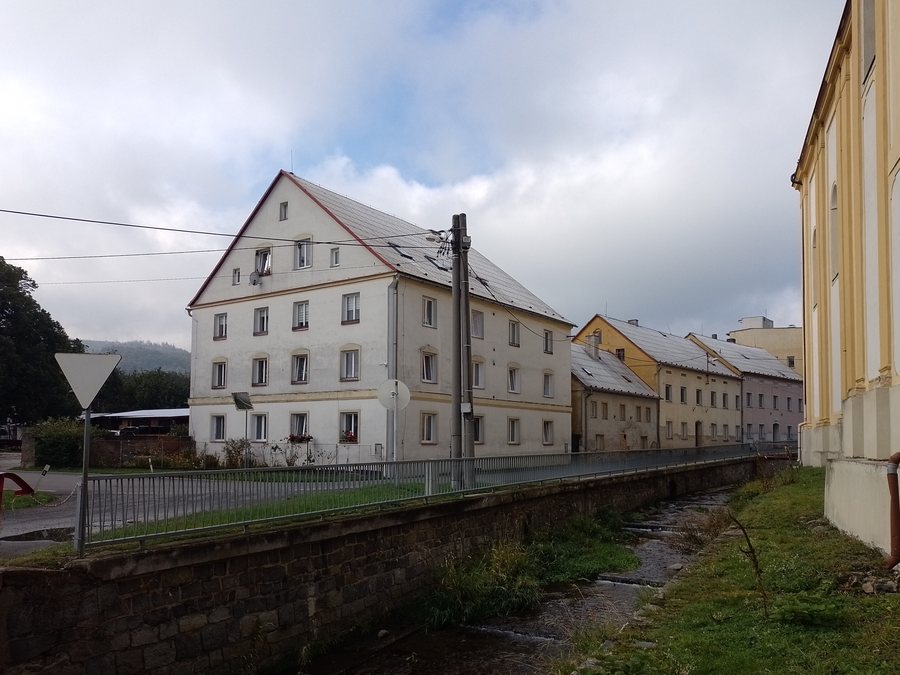
The Museum of Isolation, Internment and Integration dedicates one section of its exhibition to the history of Bílá Voda and another to the internment of religious sisters during communist rule, which began on September 28, 1950.
Trails and Nature
The Sudeten Stations of the Cross begins at the end of the Bílá Voda district and ends at the Hauer Chapel; it passes fourteen stations.
The Marianna Oranžská nature and history educational trail presents the life and work of Marianna Oranžská in the area of Bílá Voda and Złoty Stok. Most of the trail runs through the cadastral area of Bílá Voda.
Šafářová skála is a natural attraction in the form of a frost cliff and is also a rock formation with a viewpoint.
Music and Remembrance
Editions of the Brosmannův festival duchovní hudby took place from 2011 to 2019 and from 2021 to 2025. The festival honors an important figure who studied philosophy in Bílá Voda in 1752–1753, worked there as a music teacher, and returned to Bílá Voda in 1778–1787 as rector of the Piarist college and parish priest.
Cuisine
Bílá Voda has a bread oven for demonstrations of breadmaking and the production of other baked goods.
More local pages: Uhelná, Žulová, Písečná, Lipova Lazne, Kobylá Nad Vidnavkou, Zlate Hory, Horni Lipova, Javornik.
To the overarching travel overview: Okres Jeseník.

