
Mučín: Nature, Cave and History in the Cerová vrchovina
Accommodation in Mučín
Mučín lies in the western part of the Cerová vrchovina and in the valley of the Mučínsky potok. The stream is 10.9 km long and flows into the Ipeľ as a left-bank tributary. The landscape of the village therefore includes both rolling hills and a clearly named valley watercourse.
Nature
The protected Baboš complex is part of Mučín’s natural environment. Heat-loving oak forests with oak-hornbeam stands grow in this area. Black locusts are common there. Baboš extends across the cadastral territories of Mučín and Lipovany. The name of the complex therefore covers areas in both of these cadastral territories, while the described forest communities and the frequent black locusts determine the character of the protected area.
The geological history of the surrounding area is also documented by specific finds. A rich shark fauna and whale remains were discovered south of Lučenec in Lower Miocene marine deposits of the South Slovak Basin. The landscape thus combines forest communities with traces of a much older marine world. The sites point to a time when the landscape described today was shaped by marine deposits, thereby adding a natural-history perspective to the surroundings of Mučín.
Cave and Trails
Mučínska jaskyňa is a 12 m long pseudokarst cave protected as a natural monument. It was formed by the weathering of a charred tree that was covered by volcanic ash long ago. The cave is freely accessible to the public; a path leads to it from the municipality of Mučín. Its formation is therefore linked to a charred tree and volcanic ash, not to ordinary limestone formation.
The educational trail “Náučný chodník Mučínska jaskyňa” runs from Mučín for 1.5 km to the cave. The stated length refers to the educational trail, not to the actual cave chamber. For planning the route, the 1.5 km length of the trail and the cave’s length of 12 m should therefore be understood as two different figures.
History and Culture
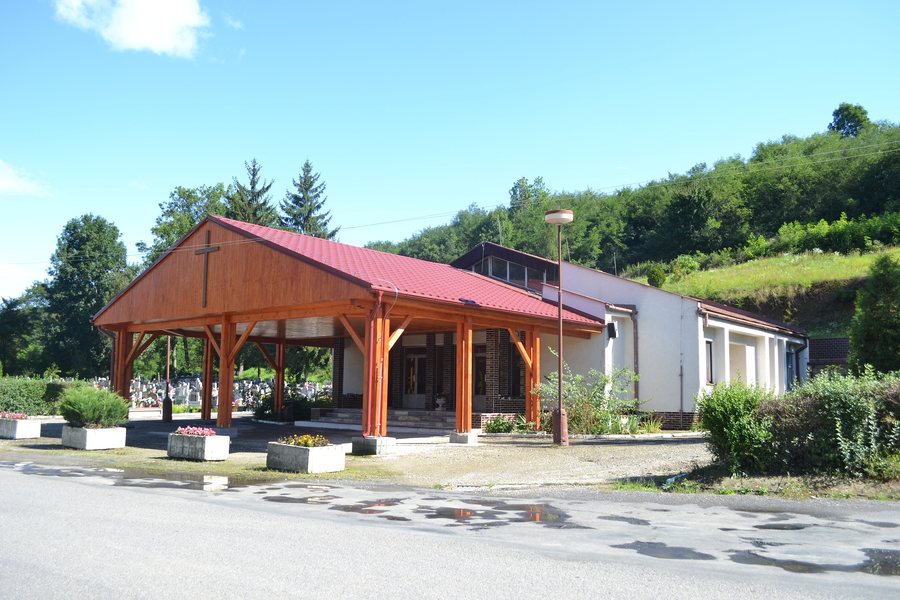
The first written mention of Mučín dates from 1246. From the 13th to the 16th century, the village was a subject community of Fiľakovo Castle. The local sacred architecture includes the branch church “Kostol Narodenia Panny Márie”, built in 1966. The history of the village thus extends from its first medieval mention through its historic connection with the castle to a 20th-century church building.
The municipality makes an effort to organize traditional cultural activities for its residents every year. These include putting up and taking down the maypole, Children’s Day and a Christmas market in the local park. These events take place at different times of the year and connect local community life with traditional customs. The maypole, Children’s Day and Christmas market each represent a separate part of the local events calendar.
When comparing hotels in Mučín, pay attention to your travel dates, room category and cancellation conditions.
More destinations
More destinations: Čakanovce, Bulhary, Kotmanová, Trebeľovce, Holiša, Rapovce, Belina, Podrečany
To the higher-level travel overview: Lučenec District.

