
Parkan: Hotels, Thermal Water and Culture
Accommodation in Parkan
Štúrovo combines thermal water, river landscapes, cycling routes and cultural history. The townscape includes the Vadaš Thermal Resort, the Mária-Valéria Bridge, museums, historic monuments and other cultural heritage sites.
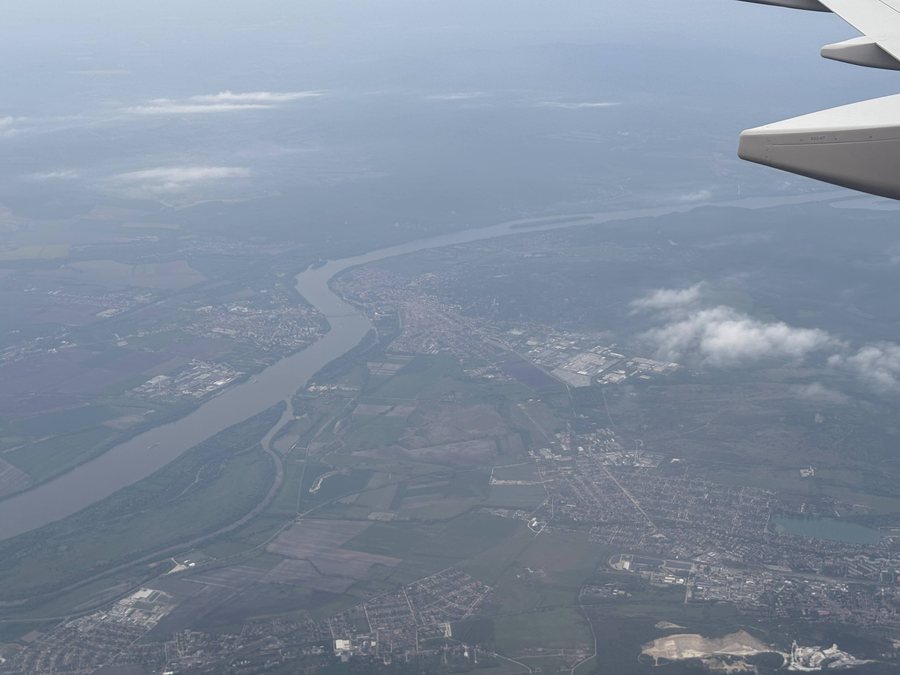 File:Dorog, Esztergom, Štúrovo (Párkány), légifelvétel.jpg
Photo: Andrashann via Wikimedia Commons, CC BY 4.0
File:Dorog, Esztergom, Štúrovo (Párkány), légifelvétel.jpg
Photo: Andrashann via Wikimedia Commons, CC BY 4.0
Thermal Water and Water Areas
A 39.3 °C thermal spring rises on the northern outskirts of Štúrovo. The recreational area with the Vadaš outdoor swimming pool was built around it on 24 hectares. The Vadaš Thermal Resort includes 8 outdoor and 5 indoor pools, including the Lagúna wave pool. There are also 6 water slides. The facilities are complemented by a lake for boating and pedal boating.
Landscape and Cycling Routes
Near Štúrovo, the Hron flows into the Danube. The town is surrounded by the Kováčovské kopce hills; at 395 m, Burda is the highest peak in these hills. The signposted cycling routes also follow the river landscape. The first stage of the Ostrihom–Štúrovo cycling route is 16.8 km long and begins in Štúrovo’s pedestrian zone. The second stage, Štúrovo–Kamenný Most–Vŕšok–Nána–Štúrovo, is 23.8 km long and follows the embankments of the Danube and Hron. The third stage, Štúrovo–Kamenica nad Hronom–Chľaba–Leľa–Bajtava–Chľaba–Štúrovo, is 42.7 km long and suitable only for mountain bikes.
On the banks of the Danube near the Mária-Valéria Bridge stands a viewing bench that also serves as a photo frame. Štúrovo also has two bicycle service stands for minor repairs; one of them is located near the Vadaš thermal baths.
History and Culture
The Štúrovo Town Museum is a local museum focusing on ethnography and local history. It is housed in a building constructed in the 19th century by the Franklovci family and has three halls for permanent exhibitions, one hall for temporary exhibitions and an outdoor exhibition in the courtyard. Exhibitions by local and foreign artists change monthly at the Július Barta Town Gallery; the gallery has been open to the public since 1993.
Several monuments add further historical accents. The military cemetery with a monument in Štúrovo dates from 1947 and was declared a national cultural monument on 17 July 1963. The military cemetery with a monument on Ul. sv. Štefana is the only immovable national cultural monument in Štúrovo. Štúrovo is also home to a bronze equestrian statue of the Polish King Jan Sobieski, which was unveiled in October 2008. Beside a church stands a Baroque Calvary group from 1766 with a statue of Saint John of Nepomuk. Štúrovo is also home to a protected monument built in the Baroque style in 1701.
More recent and older buildings also form part of the town’s visible history. The iron Mária-Valéria Bridge was opened on 28 September 1895. After its reconstruction in 2001, it was ceremonially inaugurated on 11 October 2001; today it connects Štúrovo with Esztergom. In the park in front of the town hall, the Rozprávajúca skala sculpture commemorates the town’s first written mention. The former synagogue at Hlavná 32 is also among Štúrovo’s cultural and historical sights.
Fair and Regional Products
The Šimon and Judas fair takes place in Štúrovo every year at the beginning of October. It is the only one of the four fairs originally held there that has survived in Štúrovo, and it continues to shape the October cavalcade. The Vizamarket online shop, launched on 26 April 2023, provides a clearly documented date-related connection to regional products. It offered fresh homemade products from the region and provided for weekly collection.
More Destinations
You can also discover other destinations at this level: Nána, Malá Nad Hronom, Nové Zámky, Kamenný Most, Chľaba, Rastislavice, Šurany, Ľubá.
To the overarching travel overview: Nové Zámky.

,_l%C3%A9gifelv%C3%A9tel.jpg)