
Sevastopol: Harbor City, History, and Travel Planning
Sevastopol lies in the southwest of Crimea, on several bays of the Black Sea. The city is known above all for its harbor, military history, and the archaeological site of Chersonesus. For an objective overview, historical accounts and current travel conditions should be clearly distinguished. The Foreign Office’s travel and security advice for Ukraine should therefore be consulted before making any specific travel plans.
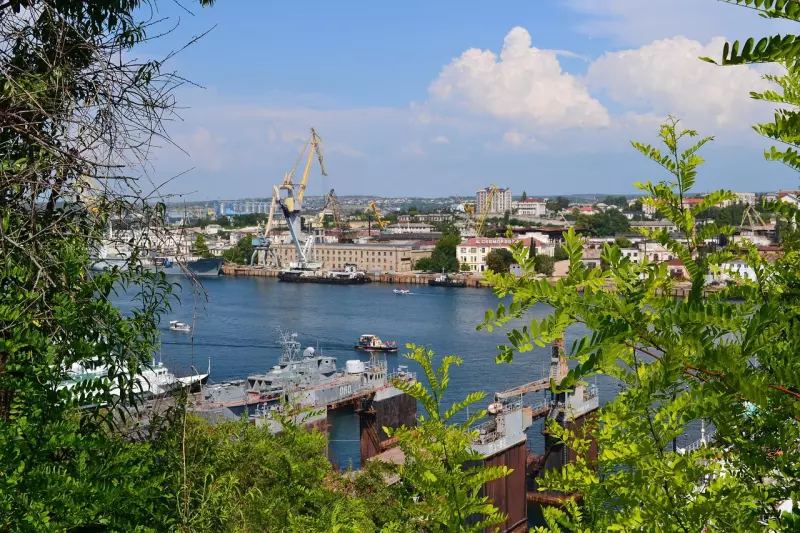 Sewastopol
Photo: Elen Wolf auf Pixabay
Sewastopol
Photo: Elen Wolf auf Pixabay
Quick facts: Sevastopol
- Sevastopol lies in the southwest of Crimea, on a deeply indented coastline with several bays.
- Its harbor, military history, and the archaeological site of Chersonesus shape the city’s historical profile.
- The central waterfront, outlying districts, and historic sites are not all part of one short walking route.
- Balaklava, Yalta, and other destinations in Crimea are separate parts of a trip, each requiring its own time.
- Historical descriptions of museums, transport, accommodation, and access do not guarantee current availability.
- Safety, entry, transport, and access information should be checked independently before any specific trip.
- Sevastopol lies on a deeply indented coastline in the southwest of Crimea.
- The harbor, bays, and military-historical sites shape the cityscape.
- Chersonesus is one of the area’s most important archaeological sites.
- Balaklava and other destinations in Crimea are separate excursions and are not automatically part of a day’s itinerary.
- Older descriptions of museums, transport routes, and sightseeing do not confirm that they are accessible today.
- Current safety, entry, and transport conditions must be checked independently of historical sources.
Harbor city and bays
Its position on several bays explains why Sevastopol has historically and in its urban development been so strongly shaped by the sea. The waterfront areas, harbor basins, and viewpoints do not form one single, compact center. Anyone seeking to get a sense of the city should take distances and the locations of individual sites into account. A walk through the central areas offers a different impression from a visit to outlying districts or historic sites.
The Sevastopol naval base is one of the subjects associated with the city’s harbor and military history. Public access, sightlines, and current rules can change. Such information should therefore be treated with particular caution and not taken for granted on the ground.
Chersonesus and ancient history
The ancient city of Chersonesus brings together archaeology, Greek colonial history, and the coastal landscape. The ruins, stretches of wall, and religious buildings can only be properly appreciated if enough time is allowed for exploring the site, reading the signs, and getting around. The site’s history goes back long before the modern port city was founded, adding an earlier chapter of Crimea’s past to its military-historical perspective.
For regional context, the information on Crimea is useful. Balaklava is known for its harbor and bays, while Alupka and Yalta offer different highlights along the southern coast. Simferopol is often mentioned in older itineraries as a transport hub. These connections provide historical or geographic context and do not guarantee that travel is currently possible.
Military history and remembrance
Sevastopol was the site of major battles during the Crimean War and the Second World War. Monuments, memorials, museums, and fortifications refer to different periods and narratives. A responsible account should explain their historical significance without adopting political slogans or uncritically glorifying the past. Local rules and a respectful attitude are essential at memorial sites.
Further points of reference include Kerch, Bakhchysarai, Feodosia, and Yevpatoria. These places show how varied the peninsula is in its history, landscape, and urban development. Travel times, access, and the security situation must be checked for each location using current information.
Putting the harbor, bays, and history into context
Sevastopol is shaped by its location on several bays. A city walk, views of the harbor, and historic sites do not necessarily fit into one short, straightforward route. Distances, access, and return transport should be considered separately for outlying districts, museums, and archaeological sites.
For regional orientation, see Ukraine, Crimea, Balaklava, Yalta, and Alushta. Culture and history, museums and exhibitions, and getting there and transport help distinguish the different areas of interest. Travel preparation is an essential first step when planning a trip to a sensitive destination.
Before making any travel plans, check entry requirements and documents, the travel checklist and itinerary, and the current travel and security advice for Ukraine. Access, transport routes, opening hours, and accommodation conditions should not be inferred from older historical texts.
Sevastopol FAQ
What is Sevastopol known for?
Its harbor on several bays, military history, and Chersonesus are among the city’s most important historical features.
How can you explore Sevastopol?
The waterfront, central areas, museums, and outlying districts should be planned as separate areas of interest. Routes and access should be checked using current information.
Can Balaklava be included as an excursion?
Balaklava is geographically close to Sevastopol, but transport, access, the security situation, and the time required should be confirmed for the specific date.
Which travel information is particularly sensitive?
Safety, entry, transport, and access information takes priority. Historical information on prices, hotels, or opening hours is not a guarantee of current conditions.
