
Crimea: landscape, history and current travel conditions
Crimea is a peninsula between the Black Sea and the Sea of Azov. Older travel guides often portray it as a mix of coastline, mountains, resort towns and historic cities. This geographical and cultural diversity explains the region’s appeal, but it does not replace a current travel decision. The peninsula is connected to the mainland by the Isthmus of Perekop; along the southern coast, mountain landscapes, bays and urban areas lie close together. To get a sense of the region on a map first, start with the Crimea at a regional glance and distinguish its landscape and history from today’s circumstances.
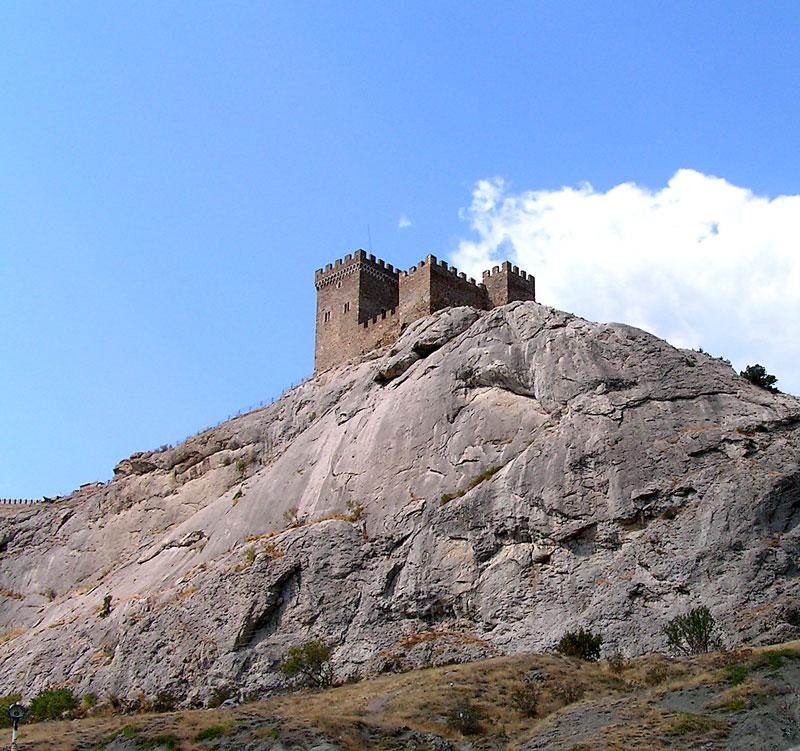 Genuesische Festung von Sudak auf einem Felsen über der Küste der Krim.
Photo: Ilya
Genuesische Festung von Sudak auf einem Felsen über der Küste der Krim.
Photo: Ilya
Quick facts: Why Crimea?
- Crimea combines Black Sea coastlines with mountain landscapes and historic sites.
- The south coast, west coast and eastern peninsula each have distinct landscape features.
- Yalta, Feodosia, Sudak and Alupka are distinct places, each with different routes and points of interest.
- Historical accounts do not establish current accessibility, opening status or safety.
- Legal status, entry requirements, transport and the security situation must be checked using current information before making any travel decision.
- A plan with just a few stages and a realistic return option offers more flexibility if circumstances change.
Between two seas
The coastline is not uniform. Open stretches, small bays, harbor areas and steeper slopes alternate. In the south, the mountains shape the view of the sea, while other parts of the peninsula appear flatter. This also means that historic townscapes vary considerably. Yalta is often associated with the south coast, while Feodosia belongs to a different coastal and harbor setting. The beaches of Crimea are also part of this historic travel image, but this does not guarantee current access or conditions.
For geographical context, it is worth remembering that distances on a map are not the same as practical routes. Mountains, coastlines and the location of towns determine whether two points make sense to visit together. A map can therefore be more useful than a long list of names. The image of Sudak’s Genoese fortress brings together the coast, rock formations and historic fortifications. It does not represent the whole peninsula, but vividly illustrates the connection between landscape and history.
History and distinct townscapes
For a long time, Crimea was a crossroads of different political, commercial and cultural histories. This complexity explains why palaces, fortresses, harbor towns, religious buildings and memorial sites appear side by side in older descriptions. For a clear overview, it helps not to treat every place as the same kind of attraction. A fortress, a harbor, a resort town and a landscape stop each answer different questions. Those looking to understand the broader context can explore destinations in Ukraine and the overview of Eastern Europe.
Old travel accounts can convey how a region was once seen: a milder coastal climate, promenades, viewpoints or historic architecture. Sudak and Alupka represent different historic townscapes. However, they are not a reliable basis for information about transport, accommodation, border crossings or specific visits. Especially in politically disputed areas and places with security concerns, historical descriptions must be kept separate from current facts. This helps avoid assuming that an appealing landscape description means a trip is possible today.
Make today’s decision responsibly
The German Federal Foreign Office provides current travel and security advice for UkraineAuswärtigen Amts. This takes precedence over older route suggestions, maps or photographs. Anyone considering a specific trip should check the applicable rules, risks and legal consequences with the Office and other relevant authorities. Entry requirements, border crossings, insurance, transport routes and local access must also be reliably confirmed for the dates in question.
A responsible decision may therefore mean treating Crimea for now solely as a geographical and historical subject. For a deeper understanding, see the pages on Yalta, Feodosia and Crimea as a geographical starting point. Concrete bookings or visit plans should come later, once current official information supports them.
Distinguish landscapes and places according to your travel interests
Geographically, Crimea is diverse: coast, mountains, steppe and historic cities do not form a single, uniform travel setting. Yalta represents the south coast, Feodosia the eastern coastal region, and Sudak another historic and scenic focal point. For beaches, compare the beaches of Crimea, without taking this as a claim about their current usability.
Those interested in comparing historic places can consider Alupka and other destinations as separate stages. The broader Ukraine overview and the Eastern Europe section provide geographical context. Distances, road conditions, accommodation and the return journey should be checked separately for the specific travel plan.
Make today’s decision responsibly
Historical descriptions of landscapes and places explain the region, but do not replace current information. Before travelling, check travel preparations, entry requirements and documents, getting there and transport and staying safe while travelling. The German Federal Foreign Office’s security advice for Ukraine takes precedence over old guidebooks or photographs.
FAQ about Crimea
What kinds of landscapes define Crimea?
Coast, mountains, steppe and historic cities characterize different parts of the peninsula. The right choice depends on your travel interests and current accessibility.
Which places are often visited together?
Yalta, Feodosia, Sudak and Alupka offer different points of interest. The specific combination depends on routes, accommodation, time and current conditions.
Are old travel descriptions enough to plan a trip today?
No. They can explain the history and landscape, but do not confirm current entry requirements, safety, transport, access or opening status.
What should be checked before travelling?
Preparation should include current security and legal information, entry requirements, transport routes, accommodation, payment options and accessibility of individual destinations.
