
Riga: Old Town, Art Nouveau, Markets, and the Daugava
Riga is Latvia’s capital, a transport hub, and a cultural center. The city lies on the Daugava, near the Gulf of Riga. Riga is an especially rewarding destination for travelers because its Old Town, Art Nouveau district, markets, and seaside excursions are easy to combine. Anyone planning a trip around Latvia can make Riga a destination in its own right or combine it with other stops in the Baltics.
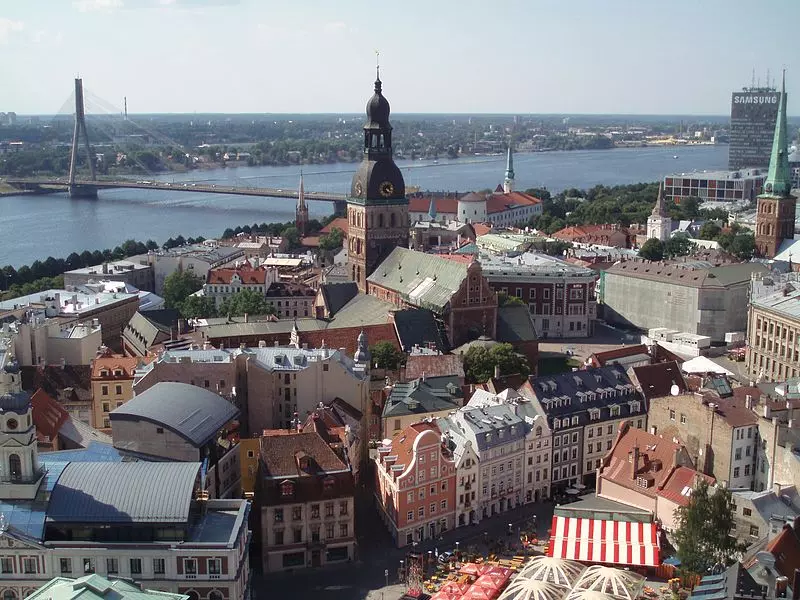 Die Altstadt von Riga - im Jahr 2014 die Kulturhauptstadt Europas
Photo: David Holt / wikipedia cc-by-sa-2.0
Die Altstadt von Riga - im Jahr 2014 die Kulturhauptstadt Europas
Photo: David Holt / wikipedia cc-by-sa-2.0
Riga at a glance
- Riga is Latvia’s capital, on the Daugava near the Baltic Sea.
- The Old Town, Art Nouveau district, market halls, and riverfront offer a variety of walking routes.
- The main areas of the city are not all within one short walk, so plan visits according to the time of day.
- Jūrmala and Sigulda add coastal scenery and countryside to a Riga trip, but each requires its own travel time.
- Museums, markets, parks, and cafés offer flexible alternatives when the weather is changeable.
- Check opening hours, events, transport, and accommodation availability before your trip.
Getting your bearings
Riga: Old Town, Art Nouveau, and the Daugava in Latvia makes for a trip that is easy to plan at a relaxed pace. It helps to understand where the city lies in relation to nearby destinations, the train station, the coast, the river, the lagoon, or the national park. This makes it easier to decide whether a day trip is enough or an overnight stay would give you more flexibility.
For route planning, it is worth looking at Latvia, Jurmala, Sigulda, Tallinn, the Baltics, Estonia, Vilnius, and Kaunas. These are natural additions if your trip already takes you through Latvia, Lithuania, or the neighboring Baltic countries.
What defines the destination
The city’s character comes from its landscape, history, and present-day life. Riga is about more than individual sights: it is also about routes, riverbanks, squares, parks, and how a stay feels over the course of a day. It is particularly helpful to get your bearings in the central areas first, then plan excursions or longer walks.
- the Old Town, with the cathedral, St. Peter’s Church, the House of the Blackheads, and winding lanes
- the Art Nouveau district around Alberta iela and Elizabetes iela
- the Central Market in the former zeppelin hangars
- the Daugava riverfront as a useful point of reference
Riga’s Old Town, Art Nouveau district, Central Market, and Daugava riverfront can be linked with well-planned walking segments. Factor in the streets, weather, and your own stamina when moving between districts; a short ride may make more sense than a long detour. If you add Jūrmala or Sigulda to your trip, check the timetable and return journey separately from your walk around the city.
Planning your time in the city
In summer, Riga’s Old Town, markets, riverfront paths, and events attract more visitors, so getting an early start on your sightseeing can make for a more pleasant day. Spring and fall often offer a quieter pace for exploring architecture and museums, while in winter, indoor attractions and short walks become more important. Confirm current exhibitions, event dates, and opening hours directly before your visit.
For families in Riga, short stretches around the city, with a clear change of scene between the Old Town, a park, a museum, and a break by the Daugava, usually work better than a packed schedule. Keep cobblestones, walking distances, and wait times in mind. If you also visit Jūrmala or Sigulda, plan the outbound and return journeys as a separate part of your itinerary, and leave room for changes in the weather.
Getting around the region
Riga combines easily with other destinations in the region. In Latvia, Riga, Jurmala, and Sigulda make a varied trio: city, coast, and Gauja countryside. In Lithuania, Klaipeda, Palanga, Neringa, Nida, and Juodkrante can be combined for a trip along the western coast.
If you have more time, you can extend your stay with Vilnius, Kaunas, Tallinn, or other stops in the Baltics. For a first trip, a clear selection is often enough: one capital, one coastal destination, and one nature or spa destination. In Riga, consider not only what you want to see but also road conditions, weather, daylight, and a safe return.
Practical information
The best time to visit Riga depends on the balance you want between city sightseeing and excursions. Late spring and early fall are often well suited to the Old Town, Art Nouveau district, markets, and walks. Summer brings long evenings and more events, but also greater crowds. In winter, museums, market halls, and short walks take priority; confirm opening hours in advance.
In Riga, the neighborhood you stay in can make more difference than its distance from the city center. A location near the Old Town, train station, Central Market, or Daugava can shorten journeys, but depending on the street, it may also mean more traffic and noise. Before booking, check public transport, routes with luggage, parking options, and how to get back to the train station or airport.
Planning Riga between the Old Town, Art Nouveau, and the Daugava
Riga is easy to explore on foot and with short journeys if you sensibly combine the Old Town, Art Nouveau district, Central Market, Daugava riverfront, and train station. Latvia’s capital is an obvious starting point for trips around Latvia or the Baltics.
For a two- or three-day visit, it helps to plan a clear order: the historic Old Town, the architecture district, markets, the riverside, and possible excursions to Jurmala or other regions. If you get your bearings in the city’s districts and transport early, Riga becomes more than a place to pass through—it becomes a destination in its own right.
Plan Riga as a city break in its own right, not just as a place to change trains while traveling around Latvia. Jurmala adds beaches and spa-town history to the capital, while Sigulda is known for its Gauja scenery and castles. For your stay in the city, combine the Old Town, Art Nouveau district, Central Market, and Daugava according to their location and the time available; Culture and history can help you choose suitable indoor and outdoor attractions.
For a specific itinerary, consider getting there and getting around, trip preparations, money and payments, and language and communication together. Nature and landscapes can be part of a walk along the Daugava or an excursion. Check opening hours, timetables, events, and any potential changes directly before your visit, so you can enjoy Riga even on a short stay, with realistic travel times and breaks.
Practical trip planning
Riga is a great addition to a trip around Latvia: it has a distinctive character of its own and is also well connected to nearby destinations. Your stay will be more rewarding if you avoid cramming too many stops into one day. That leaves time for riverside walks, short museum visits, café breaks, and the quieter side of the Baltics.
Planning the Old Town, Art Nouveau, and the Daugava
For your first day in the city, you can combine the Old Town, central squares, and a stretch along the Daugava. The Art Nouveau district offers its own architectural highlights and is best planned with plenty of time for walking and sightseeing. The market halls, parks, and cafés provide places to take a break between walks.
If you want to explore beyond Riga, you could plan a visit to Jūrmala for the coast or Sigulda for scenery and a day trip. Tallinn, Vilnius, and Kaunas are longer stops on a Baltic itinerary. The Baltics overview and Latvia are useful for comparing destinations in the region, but they are no substitute for planning the specific connections you will take.
When preparing, consider getting there and getting around, trip preparations, money and payments, and language and communication. Latvia Travel offers additional up-to-date information. Check opening hours, weather, events, transport, and accommodation for your travel dates.
Riga FAQ
How many days do you need in Riga?
Two full days give you time to explore the Old Town, Art Nouveau district, market halls, Daugava riverfront, and a few museums. A third day is ideal for other neighborhoods or an excursion.
What is the difference between the Old Town and the Art Nouveau district?
The Old Town features medieval streets and squares, while the Art Nouveau district is characterized by imposing façades and wider streets.
Can you visit Jūrmala or Sigulda as a day trip?
Yes, as long as you plan realistic travel times, time at the destination, and the return journey. Both destinations offer a different experience from a day in Riga.
What can change your plans for the day?
Weather, opening hours, events, transport, museum visits, and the location of your accommodation all affect the best order for exploring the city’s different areas.
