
Klaipeda: Port City, Old Town and Baltic Coast
Klaipeda lies on Lithuania’s Baltic coast and is the country’s most important port. The city works well as a destination in its own right, as a starting point for the Curonian Spit, and as part of a route through the Baltics. The port, Old Town, riverfront and coast are relatively close to one another; at the same time, it is worth setting aside dedicated time for the Spit and the surrounding area.
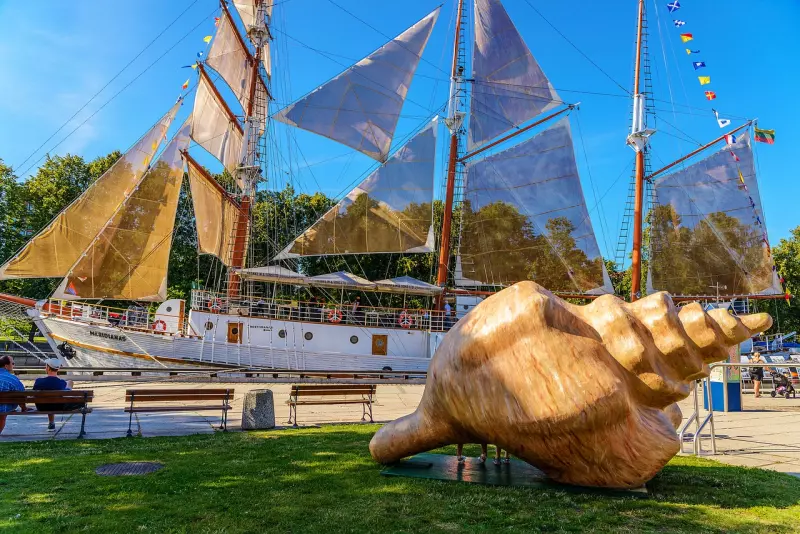 Klaipeda Hafenkai mit Segelschiff
Photo: leonid927 auf Pixabay
Klaipeda Hafenkai mit Segelschiff
Photo: leonid927 auf Pixabay
Quick facts: Klaipeda
- Klaipeda lies on Lithuania’s Baltic coast at the entrance to the Curonian Lagoon.
- The Old Town, port, riverfront and coastal destinations each offer a different focus.
- The Curonian Spit and the Sea Museum require separate planning, time to spare and up-to-date ferry information.
- Neringa, Palanga and Klaipeda can be combined, but they do not form a single city or beach itinerary.
- Wind, weather, season, ferry services, parking and museum opening hours affect the day’s plans.
- Compare accommodation locations and transport options with your planned activities before travelling to the Baltic coast.
- Klaipeda is a Lithuanian port city on the Baltic Sea, at the entrance to the Curonian Lagoon.
- The Old Town, port district and waterfront paths are easy to combine.
- The Curonian Spit is reached by ferry; check current timetables and seasonal schedules.
- The Lithuanian Sea Museum is on the northern part of the Spit and needs to be planned as a separate visit.
- Palanga and Neringa complement Klaipeda as coastal and nature destinations.
- Wind, weather, ferry services and peak season can affect day trips more than a map might suggest.
Old Town, port and waterfront setting
The compact Old Town, with its narrow streets, traces of half-timbered architecture and Theatre Square, makes a good focus for a first stroll. From there, paths lead to the port, the waterfront and the points where the city meets the water. To understand Klaipeda’s history, compare its different districts: trade and shipping shaped different areas from those defined by residential life, culture and today’s leisure activities.
The port’s role is evident in the cityscape, although not every area is used for tourism. Respecting operational areas and following local routes are therefore important. The Klaipeda Sea Museum offers a distinct experience and cannot easily be squeezed in between several short Old Town stops. For a more relaxed itinerary, a day in the city and a separate day on the Spit are usually easier to plan.
The Curonian Spit and the Baltic coast
The Curonian Spit brings together dunes, forest, Baltic beaches and the Curonian Lagoon. The landscape is a UNESCO World Heritage Site; the UNESCO description of the Curonian Spit explains the distinctive relationship between its natural and cultural landscapes. For visitors, this means that conservation rules, designated paths and local requirements are part of planning a trip.
If you have only one day, do not try to fit in every place, the museum and long beach walks. Nida, Juodkrante and other parts of the Spit each have their own character. Travelling by ferry, bus, bicycle or car involves different journey times. Check current connections, parking options and any fees before setting off.
Sea Museum, beaches and planning for families
The Sea Museum is especially appealing to families and travellers who want to combine an excursion with an interest in nature and maritime history. Opening hours and accessibility may vary by season. Baltic beaches feel different in windy, changeable weather than in calm summer heat, so practical preparations include suitable clothing, sun protection and a backup plan for a weather-related break.
For a beach holiday, Palanga may be a better fit, while Klaipeda is more defined by its port, urban history and proximity to the Spit. Combining the two is possible, but plan around actual travel times. If you are travelling without a car, take particular care to check return journeys from smaller coastal towns.
Combining Klaipeda with Lithuania and the Baltics
Klaipeda can be combined with Lithuania, Vilnius and Kaunas. Another route could take you through Estonia and Tallinn, or include Latvia and Riga. The neighbouring countries are geographically close, but timetables, border requirements and transport conditions should be checked separately for your specific trip.
For a first trip, combining a capital city, a coastal town and a nature destination is often enough. If you start in Klaipeda, you can explore the city first and then decide whether the Spit, Palanga or a longer onward journey would be the best use of your time. This keeps the itinerary flexible without missing the region’s main landscapes.
When to visit and practical preparations
June to August brings long days and good conditions for beach and Spit excursions, but also higher demand and more traffic. May, September and early autumn are often quieter for sightseeing and walks. In winter, the port, museums and Old Town remain interesting, while ferry services, opening hours and weather may place greater limits on excursion plans.
The official Klaipeda tourism website is a useful source of up-to-date information on attractions and regional activities. Before travelling, also check where your accommodation is located, ferry times, parking, the weather and any conservation-area rules.
Combining the Old Town, port and waterfront
Klaipeda can be planned as a port city, an Old Town destination and a starting point for exploring the Baltic coast. A city walk involves different routes from a visit to the Curonian Spit or the Sea Museum. Wind, ferry times, parking and the return journey should therefore be considered when choosing the day’s destination.
For regional trip planning, the Baltic states, Lithuania, Neringa, the Klaipeda Sea Museum, Palanga, Vilnius, Kaunas and Šiauliai offer options for different stages of a trip. Getting there and getting around covers the ferry port, vehicles and onward travel.
Before your visit, update your travel preparations and plans for nature and coastal destinations. The official travel information for Klaipeda and the UNESCO entry on the Curonian Spit are also useful for planning. Check ferry times, opening hours, weather and access for your travel dates.
Klaipeda FAQ
How many days should I spend in Klaipeda?
One or two days give you time for the Old Town, port and another destination. Set aside a separate block of time for the Curonian Spit or the Sea Museum.
How do you get from Klaipeda to the Curonian Spit?
The exact connection depends on the ferry port, vehicle, season and destination. Check the current timetable, ticket conditions, parking and return journey.
Can Klaipeda be combined with Palanga?
Yes, as long as you do not try to fit too many coastal destinations into a tight schedule. Allow Klaipeda and Palanga the time their travel distances and the weather actually require.
What should I keep in mind when visiting the waterfront?
Take wind, weather, ferry services, path conditions, opening hours, clothing and extra time for the return journey into account when planning the day.
