
Konye-Urgench: Historic City in Northern Turkmenistan
Konye-Urgench, also known as Köneürgenç or Old Urgench, was an important center of Khorezm. Its monuments, now scattered across the landscape, belong to different periods: a 62-meter-high minaret, medieval mausoleums, and the remains of a fortified city define the open terrain.
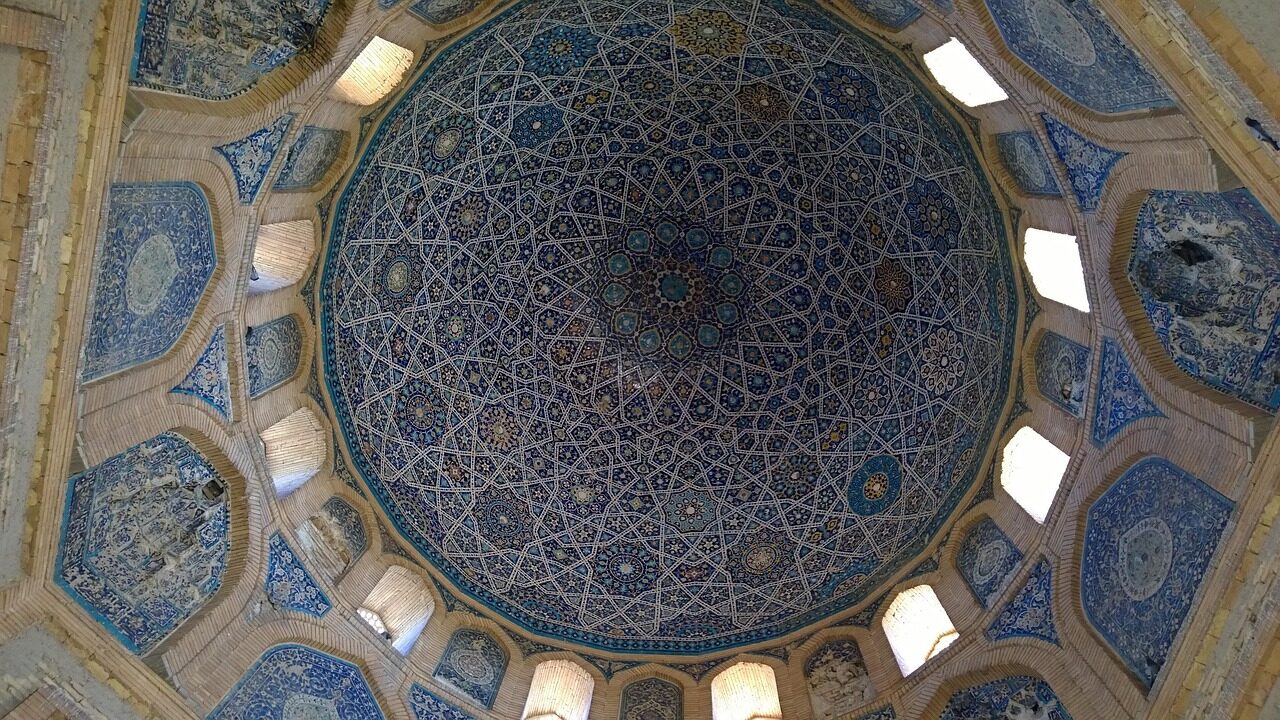 Blau verzierte Kuppel- oder Gewölbedecke eines historischen Bauwerks in Alt-Urgench.
Photo: hanmuhado0 from Pixabay
Quick facts: Konye-Urgench
- The historic city lies in northern Turkmenistan, in the ancient cultural region of Khorezm.
- UNESCO added Kunya-Urgench to its World Heritage List in 2005; most of the surviving monuments date from the 11th to the 16th century.
- The Kutlug-Timur Minaret is 62 meters high; its precise construction date is disputed.
- According to historical accounts, the Turabek-Khanum Mausoleum dates to the 1330s and is known for its mosaic dome.
- The minaret, mausoleums, and remains of fortifications are spread across open ground, making for several separate stops.
- German citizens need a visa; their passports must be valid for at least six months upon entry.
Khorezm and the UNESCO site
Konye-Urgench was an urban center in historic Khorezm, along the trade routes of Central Asia. UNESCO has listed Kunya-Urgench as a World Heritage Site since 2005. The surviving buildings document several centuries of architectural development, particularly from the 11th to the 16th century. Fortifications, the minaret, and the mausoleums represent different parts of a much larger historic landscape.
The Kutlug-Timur Minaret dominates the site. Turkmenistan’s government portal gives its height as 62 meters and describes a tapered brick shaft encircled by bands of ornament and inscriptions. Its exact construction date remains disputed: some scholars date it to the 11th century, while others attribute it to the 14th century, during the time of Kutlug-Timur.
According to the official account, the Turabek-Khanum Mausoleum, also spelled Törebeg Khanum, dates to the 1330s. Its architecture is defined by a hexagonal hall, colorful wall mosaics, and geometric and floral decoration on the dome. The Najm-ad-din-Kubra Mausoleum and other tombs add distinct religious and dynastic features. The ruins of Ak-Kala and Kyrkmolla round out a visit with remains of fortifications and settlements.
Plan separate stops for the monuments
The sights are not clustered together like those in a compact city center. A visit takes you from the minaret and mausoleums to more widely spaced ruins; in the summer heat, distances, time of day, and shade affect the order of your itinerary. A full day allows time for several key monuments and the walks between them. Water, a hat, and a way to get between stops are useful on this open site.
The site unfolds as a sequence through history: the Kutlug-Timur Minaret and the mausoleums represent medieval architecture, while Ak-Kala and older settlement mounds point to fortifications and urban development. You can organize your Konye-Urgench visit around the buildings and walking distances. The southeastern oasis city of Merv is far away, while the capital, Ashgabat, is a separate urban highlight.
Getting to Turkmenistan and entry requirements
Konye-Urgench is in the north of the country. The overland route through Turkmenistan connects the north and south over long distances. Merv and Ashgabat are separate legs of a journey; Khiva lies across the Uzbek border. A cross-border trip through Central Asia requires extra time for travel and border crossings.
German citizens need a visa and a passport that is valid for at least six months upon entry. To obtain a visa before arrival, you need an invitation from a private or official organization in Turkmenistan. A visa on arrival requires a Cakylyk invitation approved in advance by the Migration Service, as well as the same travel document used in the application for approval. Passport and visa documents are required for entry.
Travel between the scattered monuments is a distinct part of the visit. Getting there from another part of the country involves a road journey and local transfers between the monuments. When choosing accommodation, it is useful to consider its location in relation to your planned itinerary; the scattered monuments require additional travel between stops. A north-to-south itinerary helps organize the long distances between the historic sites of Turkmenistan and its capital. The ruins of Merv are an additional archaeological stop; the capital is in southern Turkmenistan, and Ashgabat adds an urban program to the route.
Planning your trip and length of stay
Preparing for your trip includes arranging visa documents and making a personal itinerary. Scans of your passport, visa, and invitation confirmation can be kept separately from the originals in your digital travel documents; backup funds and a Plan B can help with border queues and delays. Credit cards are not accepted in the provinces and are only accepted at a few hotels in Ashgabat; ATMs are scarce in the capital. The German Federal Foreign Office recommends carrying enough cash, preferably in US dollars; the amount of your cash reserve should reflect your planned expenses. Avoid overland travel after dark; staying safe on the road starts with traveling in daylight and allowing extra time.
A longer trip can include Tajikistan, with Panjakent or Samarkand. These cross-border legs require additional travel time and entry formalities. It is better to plan northern Khorezm and Turkmenistan’s southeastern settlements as separate parts of the trip.
Frequently asked questions about Konye-Urgench
How tall is the Kutlug-Timur Minaret?
Turkmenistan’s government portal gives its height as 62 meters. Its construction date is disputed, with scholars suggesting either an 11th-century origin or construction under Kutlug-Timur in the 14th century.
What is special about the Turabek-Khanum Mausoleum?
The official account dates the building to the 1330s. The mausoleum is distinguished by its hexagonal hall and the colorful mosaics, with star and plant motifs, on its dome.
How much time should I allow?
A full day allows time for the minaret, mausoleums, and more widely spaced ruins. Walking distances, the heat, and travel between stops shape the day’s itinerary.
What are the visa requirements for German citizens?
German citizens need a visa and a passport valid for at least six months. An application submitted before arrival requires an invitation from Turkmenistan; a visa on arrival requires a Cakylyk invitation approved in advance.
How do you continue your journey to Uzbekistan?
The direct connection between Turkmenistan and Uzbekistan is by land only; there are no direct flights or regular cross-border passenger trains. Border checks can take several hours, and border crossings are not open around the clock.
