
Ashgabat: Monuments, Museums and the Kopet Dag
Ashgabat, the capital of Turkmenistan, is often called the “City of Love.” This man-made oasis rises above the Karakum Desert and the foothills of the Kopet Dag. The city combines oriental cultural traditions with modern architecture and dazzles visitors with magnificent buildings, wide boulevards and numerous monuments.
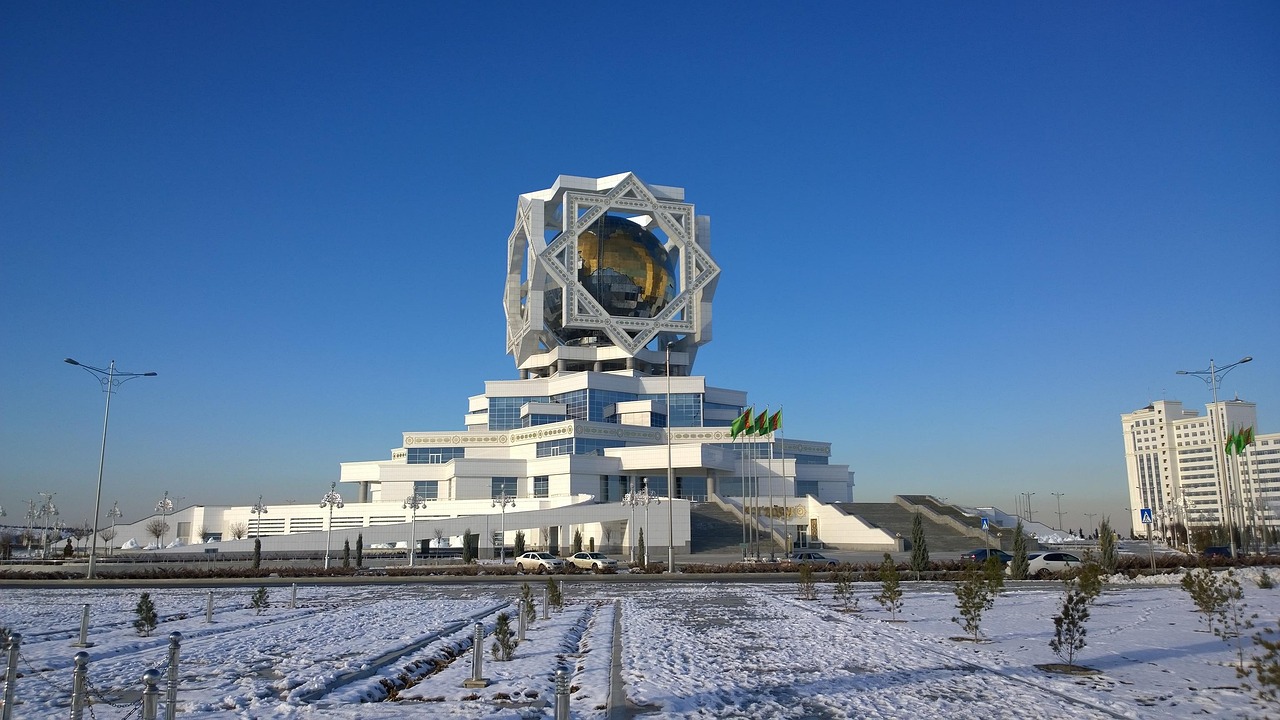 Monumentales Gebäude in Aschgabad bei winterlichem Wetter.
Photo: hanmuhado0 from Pixabay
Monumentales Gebäude in Aschgabad bei winterlichem Wetter.
Photo: hanmuhado0 from Pixabay
Ashgabat at a glance
- Ashgabat is the capital of Turkmenistan, located at the foot of the Kopet Dag range.
- Wide boulevards, monuments, museums and large squares shape the modern cityscape.
- The 1948 earthquake is part of the city’s history and explains key periods of reconstruction.
- The National Museum and Carpet Museum offer different perspectives from those found at markets and outdoor sites.
- Nisa, the desert and the Kopet Dag lie beyond a short tour of the city center.
- Visa requirements, local guides, access, photography rules, opening hours, weather and current conditions should all be checked.
The history of Ashgabat
Ashgabat was founded by the Russians in 1881 and quickly developed into an important trade and administrative center. A devastating earthquake in 1948 destroyed almost the entire city. Ashgabat was later rebuilt in the style of “developed socialism.” The city underwent a construction boom, particularly during the rule of the “eternal president” Saparmurat Niyazov, also known as Turkmenbashi, and gained numerous monuments, sculptures and gold-trimmed buildings.
Sights in Ashgabat
Although Ashgabat has few historic monuments, it offers numerous modern attractions that draw tourists:
- Arch of Neutrality (Arka Nejtraliteta): This impressive monument stands 75 meters tall and is topped by a golden statue of Turkmenbashi.
- Presidential Palace: A magnificent building with golden domes that symbolizes the country’s power and wealth.
- Ertugrul Gazi Mosque: An imposing Turkish-style mosque, one of the largest in Central Asia.
- Alexander Nevsky Orthodox Church: One of the few Christian churches in Turkmenistan, offering a glimpse of the country’s religious diversity.
- National Museum of Turkmenistan: Valuable archaeological finds from the country’s rich history are displayed here.
- Turkmen Carpet Museum: More than 2,000 finely crafted carpets offer insight into Turkmenistan’s traditional craftsmanship.
- Tolkuchka Sunday Market: A lively bazaar where visitors can buy oriental goods, handicrafts and souvenirs.
Modern architecture and monuments
Ashgabat is home to a variety of impressive buildings:
- Turkmenistan Tower: A television tower that ranks among the tallest structures in Central Asia.
- Mekan Palace: A magnificent building used for official events.
- National Library and Academy of Sciences: Important cultural and scientific institutions in the country.
- Olimpiya Stadium: A state-of-the-art sports stadium used for international sporting events.
Hotels and accommodation
Ashgabat offers tourists a wide range of accommodation:
- Grand Turkmen Hotel: A luxurious five-star hotel with first-class amenities.
- President Hotel Ashgabat: Exclusive accommodation with striking architecture.
- Hotel Ashgabat: A more affordable option offering good comfort for budget-conscious travelers.
Ashgabat is a fascinating city that captivates visitors with its unique blend of oriental culture, modern architecture and impressive monuments. Anyone traveling to Turkmenistan should not miss the capital.
Planning a visit to Ashgabat
For many travelers, Ashgabat is the main gateway to Turkmenistan. With its wide streets, monumental architecture, museums and large squares, the capital feels different from many of Central Asia’s older cities. To understand Ashgabat, don’t treat it simply as a stopover: set aside time for museums, markets, viewpoints and excursions into the surrounding area.
Practical considerations include visas, local guides, transport routes, the heat and the exact location of attractions. Ashgabat can be combined with Merv, Konye-Urgench and an overview of Turkmenistan. Check the latest entry and sightseeing requirements before traveling.
Planning a route through monuments and museums
Ashgabat can be explored through a range of different experiences: monumental avenues, museums, markets, parks and the mountain backdrop of the Kopet Dag. Turkmenistan provides the national context, while Nisa is a historic site outside the modern city. For a first day, choose a few accessible highlights based on opening access, time of day and the heat.
The National Museum and Carpet Museum add history and craftsmanship to a visit focused on outdoor sights. Confirm exhibition details, opening times and photography rules for your planned visit. Monuments and government areas may be subject to special rules, so follow local guidance and do not take photographs without checking first. Culture and history can help you choose a focus, while Nature and landscapes provides context for the transition to the Kopet Dag.
Travelers continuing beyond the capital can plan Merv or Kunya-Urgench as separate stops. Before booking, check the latest information on getting there and getting around, travel preparation, entry and documents, staying safe and language and communication. Check the latest travel advice immediately before departure.
Ashgabat FAQ
What is Ashgabat known for?
The capital is known for its monumental architecture, wide streets, museums, carpet culture and location at the foot of the Kopet Dag.
How much time should I allow for the city?
A full day is enough to visit selected outdoor sights and one museum. Visiting several museums or markets, or taking a trip to Nisa, requires more time.
Can you take photographs everywhere?
No. Follow local photography rules and guidance; check permission before taking photographs at monuments, in government areas and in museums.
Can I combine Ashgabat with Merv?
Yes, as part of a longer route. Plan the distance, transport, permits, accommodation, heat and return journey separately for each leg.
