
Tourism centers in Russia: Moscow, Saint Petersburg and Sochi
Moscow, Saint Petersburg and Sochi represent three distinct travel profiles as tourism centers in Russia: capital history and museums, architecture and waterways along the Neva, and the Black Sea coast and Caucasus. The vast distances mean that traveling between these cities involves several long-distance legs.
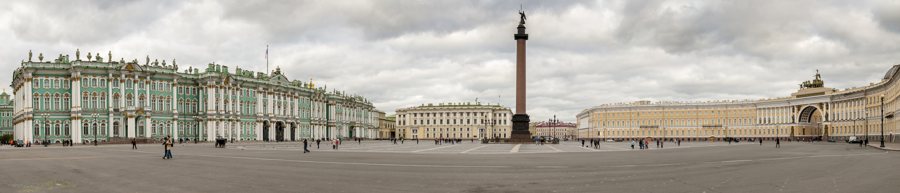 Der Palastplatz in Sankt Petersburg mit der Alexandersäule und der Fassade des Winterpalasts.
Photo: Alesia Belaya
Quick facts about Russian destinations
- Moscow brings together the Kremlin, Red Square, theaters and museums across its sprawling capital area.
- Saint Petersburg lies on the Neva at the head of the Gulf of Finland; canals, islands, bridges and palace ensembles shape its center.
- Sochi stretches along the Black Sea coast and connects seaside resorts with the foothills of the Caucasus.
- Direct air traffic between the EU and Russia has been suspended; German payment cards and payment apps do not work there.
- The cities are far apart, so each requires its own travel leg, with enough time set aside for transfers.
Moscow: the Kremlin, theaters and museums
The Kremlin and Red Square form the historic heart of Moscow. The Kremlin was initially the residence of the princes of Moscow, a religious center and the setting for state ceremonies. Most of its stone walls and towers were built between 1485 and 1516. St. Basil’s Cathedral stands on Red Square, along with the State Historical Museum and the GUM department store galleries.
A stay can combine historic landmarks with a focus on Russian art. The Tretyakov Gallery showcases Russian art, while the Pushkin State Museum of Fine Arts features collections spanning antiquity to the present, including a significant collection of French Impressionist and Post-Impressionist paintings. The Bolshoi Theatre rounds out a museum-focused itinerary with its celebrated operatic and ballet traditions. These institutions are spread across the city, so choosing which to visit also depends on how many days are available for sightseeing.
The historic center is a starting point for further routes through the country. Russia extends far beyond its capital, while Central Russia encompasses the cities and landscapes of the European heartland. For longer stays, the location and access to the museums you plan to visit are key considerations when choosing accommodation.
Saint Petersburg: canals, palaces and White Nights
Saint Petersburg was founded at the mouth of the Neva, on the Gulf of Finland, in 1703 and developed as a planned capital. Islands, canals, bridges and embankments shape its historic center. Baroque and Neoclassical ensembles such as the Winter Palace and the Hermitage give the city center a different scale from Moscow’s radially developed street layout.
During the White Nights, it stays light well into the evening in early summer. The city’s best-known sights include the raised bridges over the Neva: the central span of the Palace Bridge lifts, revealing its engineering. Walks along the riverbanks and through the central districts can be combined with visits to museums and palaces; each visit is a separate item on the itinerary. Saint Petersburg is therefore a destination for architecture, art and waterways.
Sochi: the Black Sea coast and the Caucasus
Sochi combines stretches of Black Sea coastline with mountainous landscapes on the edge of the Caucasus. The sprawling urban area includes distinct districts and long distances, so time by the sea and trips into the mountains are separate itinerary items. Seasonal highlights include swimming in summer, hiking and culinary trips in spring and autumn, and skiing and snowboarding in winter. The season therefore determines whether the focus is on the coast or the mountains.
The Russian Caucasus stretches from the coast and spa towns to the high mountains. River landscapes and vast distances define the Volga and Siberia; the Urals and the Far East are other distant travel regions. These areas call for dedicated travel legs, not short detours between Moscow and Sochi.
Travel conditions and vast distances
Direct air traffic between the EU and Russia has been suspended; connections via international hubs may be canceled at short notice. German bank cards and widely used payment apps do not work in Russia; cash withdrawals using German cards and bank transfers to Russia are also not possible.
These conditions affect arrival and stays in all three cities. Entry requirements and documents and arrival and transport are separate steps in the planning process. Travel preparations, money and payments, staying safe while traveling and contingency plans and backup options cover other practical effects of the current restrictions.
Frequently asked questions about Moscow, Saint Petersburg and Sochi
When is the best time to visit Sochi?
Seasonal highlights range from swimming along the coast in summer, to hiking and culinary trips in spring and autumn, and skiing and snowboarding in winter.
How do Moscow and Saint Petersburg differ in their urban layouts?
Moscow developed around the Kremlin and its radial ring roads. Saint Petersburg was laid out along the Neva from 1703 onward, with its islands, canals and riverside avenues shaping the city.
What makes the Pushkin Museum special for art lovers?
Its collections range from art of ancient Egypt and Greece to the present day; it is particularly renowned for its French Impressionist and Post-Impressionist paintings.
Can you visit all three cities on one trip?
The vast distances make Moscow, Saint Petersburg and Sochi separate long-distance legs. Combining them requires enough time for transfers, overnight stays and the current travel conditions.
