
Tirana: Albania’s capital, squares, and excursions
For many trips to Albania, Tirana is the main gateway, bringing together transport, culture, politics, and modern city life. When planning a trip to Tirana, the key considerations are its location, the main highlights, and how to get around. This guide focuses on the cityscape, surrounding landscape, local transport, and the kinds of trips the city is best suited to. Before setting out, always check current connections, seasonal opening hours, and local guidance shortly before you travel.
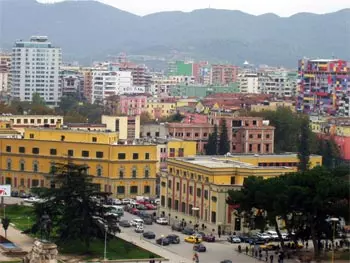 Die Hauptstadt von Albanien wirkt gemütlich zwischen den Bergen
Photo: Bjørn Andersen / public Domain
Die Hauptstadt von Albanien wirkt gemütlich zwischen den Bergen
Photo: Bjørn Andersen / public Domain
Quick facts: Tirana
- Tirana is Albania’s capital, set amid a landscape shaped by mountains.
- Skanderbeg Square, museums, historic religious buildings, markets, and modern neighborhoods each offer a different focus.
- Mount Dajti and other destinations on the outskirts are separate excursions that require additional travel and weather planning.
- Summer heat, traffic, construction, walking conditions, and the location of your accommodation all affect a city walk.
- The Adriatic coast, Berat, Shkodra, and Gjirokastra are separate legs of a trip, each requiring its own time allocation.
- Check opening hours, admission fees, traffic, weather, safety, and current event information.
Character and location
The center is defined by Skanderbeg Square, broad streets, museums, cafés, government buildings, and the nearby mountains. Blloku, the New Bazaar, and Mount Dajti add to the first impression of the city. This location matters to visitors because it determines how much time to allow for getting around, walking, excursions, and breaks. Many impressions come not just from individual sights, but from the journey between them: across squares, along waterfronts, through old-town lanes, to viewpoints, or on short trips between the train station, bus station, port, and center.
Albania’s rapid transformation is especially visible in its capital. Historic traces, socialist-era architecture, new high-rises, and lively nightlife districts are all close together. This makes Tirana a good choice for travelers who want more than just to tick off a list of sights. A relaxed itinerary works best, with time to get your bearings, take photos, enjoy coffee or meal breaks, and take a closer look at neighborhoods away from the main routes.
What to keep in mind while you’re there
Tirana is easier to explore on foot and with short rides than with a packed driving itinerary. Traffic, heat, and construction can make journeys take longer. In many cities and regions along this route, tourist areas, residential neighborhoods, busy roads, and quieter corners can change quickly from one to the next. When walking, don’t judge distances on a map by meters alone; also consider hills, heat, street crossings, transit schedules, and the return journey.
When planning your trip, consider your accommodation’s location alongside your daily routine. Central accommodation saves time getting around, while outlying locations are often quieter or offer better parking. In beach resorts, proximity to the beach, shade, access to the water, and evening traffic matter; in capitals and cultural destinations, museums, old-town areas, and public transport are more important. In Tirana, match your accommodation’s location to your main daily routes and realistic break times.
Excursions and combinations
From Tirana, you can plan trips to coastal towns, Pogradec, Berat, Kruja, and other places in Albania. If you’re visiting more than one place, avoid cramming too many stops into a single day. In southeastern Europe and the Baltics, short distances on a map can seem easier than they are in reality, with border crossings, coastal roads, city traffic, or gaps in transit schedules. It’s better to combine a few destinations thoughtfully and leave plenty of time for the return journey.
For inspiration from the existing travel guide, see Albania, Saranda, Pogradec, the Balkans. Tirana can be combined with neighboring regions, capitals, the coast, lakes, or historic landscapes.
Who this destination is right for
Tirana is a good fit for visitors who want to understand Albania before continuing to the coast, the mountains, or smaller towns. If you need precise visiting times, admission prices, transit schedules, or border regulations, check with official agencies or current local sources before departure. The right choice depends on the kind of trip you want, suitable nearby destinations, and allowing enough time for a relaxed visit.
Check current schedules for museums, the cable car, buses, and excursions, as services and traffic conditions can change. Your stay will be more enjoyable if you don’t overpack your itinerary. Half a day may be enough for a first impression, but a full day or an overnight stay often gives you a much better sense of the city. That leaves time to get around in the morning or evening, when the light, traffic, and temperatures are more pleasant.
Tirana as part of your itinerary
Tirana can be a starting point, a stopover, or a quiet contrast to better-known destinations. The key is to decide what role the city will play: culture and city life, water and scenery, borderlands and history, or relaxation and short journeys. Knowing this makes it easier to plan realistically and avoid overpacked days.
For a longer route, combine major anchor destinations with smaller stops. This creates breathing space between capitals, coastal towns, natural areas, and historic sites. Tirana can help make a trip more varied, rather than having you jump from one famous name to the next.
Tirana between city history and everyday life
Tirana is a good introduction to Albania, with central squares, museums, cafés, markets, and modern neighborhoods that are easy to combine. If you’re only staying briefly, plan visits to Skanderbeg Square, Bunk’Art, the Blloku area, and possible excursions nearby realistically, taking travel times and opening hours into account.
Other possible stops include Saranda, Pogradec, and https://www.poezdka.de/113/albanien.html. For specific trips, check city traffic, museum opening days, airport transfers, and current local guidance.
Also consider your time budget, distances, opportunities for breaks, the accessibility of your accommodation, current traffic conditions, and enough flexibility for changes on the day of travel, so the leg of your trip remains practical and responsible.
How to combine squares, museums, and the city’s mountain
A first day in Tirana could include Skanderbeg Square, selected museums, historic buildings, and a market or café area. Plan a trip to Mount Dajti as a separate block of time, allowing for the journey, weather, and return. Albania’s official travel information provides additional up-to-date guidance to help you prepare.
Albania links Tirana with the Riviera, mountains, and historic cities. Bosnia and Herzegovina, Montenegro, and Croatia are possible connections within the Balkans, but they are not quick add-ons to every capital-city stay. The season, border locations, and travel times determine the order of the route.
Before your stay, check arrival and transport, transfers and local transport, trip preparation, money and payments, staying safe while traveling, culture and history, and nature and landscape. Confirm opening hours, traffic, heat, weather, access to excursions, and return transport for the specific day.
Tirana FAQ
What is Tirana known for?
Tirana is known for Skanderbeg Square, museums, markets, historic architecture, modern urban development, and the mountain landscape on the city’s outskirts.
How many days do you need?
One or two days are enough for the center and one selected highlight. A trip to Mount Dajti or visits to additional museums may make an extra night worthwhile.
Can you combine Tirana with the coast?
Yes, if traffic, weather, accommodation, and the amount of time you want to spend in the capital all work together. Plan the coast and the city as separate legs of the trip.
What should you keep in mind on a city walk?
Take heat, shade, drinking water, traffic, construction, opening hours, safe routes back, and your accommodation’s location into account before setting out.
