
Dushanbe: Parks, Museums and Travel Preparation
Dushanbe is the capital of Tajikistan and, for many trips, the main gateway to the country. For practical planning, first decide whether Dushanbe is intended as a stay in its own right, a stop on a longer itinerary, or the main focus of the trip. In Russia and Central Asia in particular, distances, the season, connections and local conditions strongly affect how much you can realistically do on the ground.
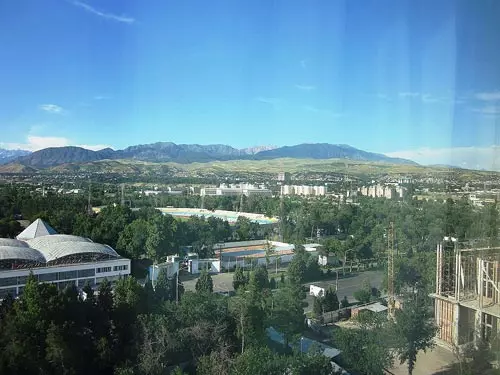 Blick über Duschanbe, die Hauptstadt von Tadschikistan
Photo: State department / gemeinfrei
Blick über Duschanbe, die Hauptstadt von Tadschikistan
Photo: State department / gemeinfrei
Quick facts: Dushanbe
- Dushanbe is the capital of Tajikistan and an important starting point for domestic routes.
- The Rudaki Avenue corridor, parks, museums and bazaars are spread across different parts of the city.
- The mountain backdrop is part of the city’s character, but it should not be mistaken for a short walk from the city center.
- Dushanbe can be a destination in its own right or a place to prepare for a Pamir trip.
- Heat, traffic, opening hours, access to cash and daylight all affect a day in the city.
- Check entry requirements, accommodation, schedules, the current security situation and any access restrictions in advance.
Dushanbe among parks, museums and mountains
Wide avenues, parks, government buildings, museums, bazaars, nearby mountains and the city’s Soviet-era history shape the impression of Dushanbe. What matters is less a long checklist of sights than an itinerary suited to your pace of travel. If you are continuing by train, plane, bus or boat, allow enough time for arrival, transfers and contingencies.
Dushanbe also shows how much travel in Eastern Europe and Central Asia can vary. Some places are good bases for museums and walks; others are defined by waterways, landscapes, religious sites or vast distances. Taking time to plan helps bring these differences into focus.
Explore the Rudaki Avenue corridor, bazaars and neighborhoods
The Rudaki Avenue corridor, museums, parks, central squares, bazaars and excursions into the surrounding area give a visit its structure. For a first visit, a clear selection is usually enough: one central area to get your bearings, one or two main interests, and plenty of time for getting around, breaks and changes in the weather. For nature or water destinations, check the return journey, season and daylight particularly carefully.
Many older travel guides list sights without up-to-date context. Before setting out, check opening hours, transport connections, ticket rules, the security situation and local advisories again. This is especially important in regions with long winters, proximity to borders, limited connections or highly seasonal operations. In Dushanbe, plan departure points, transfers and the return journey around the day’s actual itinerary.
Combine Dushanbe with Tajikistan and the Pamir
Dushanbe fits into itineraries around Tajikistan, Pamir planning and other destinations in Central Asia. Choose connections that make sense thematically and geographically: city and surrounding area, river and port, rail line and stopover, mountains and capital, or cultural history and everyday routes today. This keeps the trip coherent rather than turning it into a list of far-flung place names.
For more ideas, see related pages such as Tajikistan the Pamir Central Asia. They provide the broader context; for planning a particular visit, the key factors are getting there, length of stay and local conditions. If you are linking several stops, choose the order based on transport, time available and season.
Prepare for arrival, altitude and practical considerations
For longer journeys, allow plenty of time. An extra evening at your arrival point may be more useful than another day trip. For train and air travel, consider luggage, transfer times and the location of your accommodation early on. At river, lake and mountain destinations, weather and season often matter more than the distance on the map. In Dushanbe, consider your accommodation’s location in relation to your main routes for the day and realistic breaks.
If you plan to take photographs, visit museums or enter religious sites, respect local rules. Clothing, behavior and permission to take photographs may matter in churches, monasteries, mosques and Buddhist sites. In markets, train stations and remote areas, being discreet is usually the best way to ensure a relaxed visit. In Dushanbe, plan departure points, transfers and the return journey around the day’s actual itinerary.
Who is Dushanbe suited to?
This destination is particularly well suited to travelers who want more than to tick off familiar capitals and are interested in understanding how landscape, transport, history, everyday life and present-day use fit together. With these expectations, you can plan at a more relaxed pace and get a closer feel for what makes a place distinctive. In Dushanbe, plan departure points, transfers and the return journey around the day’s actual itinerary.
For a short stopover, a focused walk combined with a museum or viewpoint may be enough. For a stay in its own right, two or three clear priorities are better than an overloaded schedule. On very long itineraries, each additional stop should have a good reason, so the trip does not become a series of transfers. In Dushanbe, plan departure points, transfers and the return journey around the day’s actual itinerary.
Combine the Rudaki Avenue corridor, parks and museums
Dushanbe works well for a focused day in the city, combining the Rudaki Avenue corridor, park walks, a museum and time at a chosen bazaar. Tajikistan provides the regional context; the Pamir is a much more demanding next leg. The location of your accommodation, the heat and walking distances determine how many destinations can realistically be combined.
Plan visits to museums, squares, government buildings and markets around opening times, access and time of day. Local rules on clothing, behavior and photography apply at religious sites and public buildings. If you are continuing into the mountains, check transport, supplies, acclimatization and contingency days rather than treating a high-altitude route as a spontaneous excursion. Culture and history and nature and landscapes can help you choose a focus.
Other possible stops in Central Asia include Panjakent, Uzbekistan and Kyrgyzstan. Before traveling, check the latest information on getting there and transport, travel preparation, entry requirements and documents, money and payments and staying safe while traveling. The latest country information takes precedence over older city guides.
Dushanbe FAQ
How much time should I allow for Dushanbe?
A full day is enough for a focused city visit and museum. Two or three days leave time for markets, more parks and preparations for onward travel.
What should I include in a first walking tour?
The Rudaki Avenue corridor, a park, a museum and one selected market make a realistic starting point. Adjust your plans for walking distances, heat and opening hours.
Is Dushanbe a starting point for the Pamir?
Yes. Before departure, check transport, supplies, acclimatization, weather, road conditions and contingency days for your specific route.
What should I check before my stay?
Confirm entry requirements, accommodation, access to cash, opening hours, transport, weather, local rules and current security conditions before your trip.
