
Birštonas: Mineral Water, Spa Park and Nemunas Loops
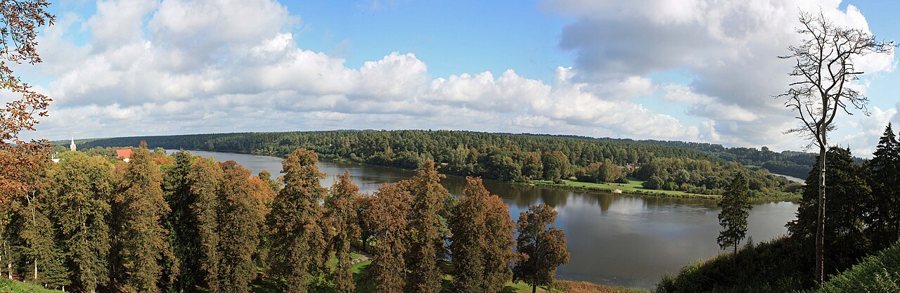 Die Memel bei Birštonas. Foto: Aleksasfi / Wikimedia Commons, CC BY-SA 3.0; für die Webausgabe verkleinert.
Photo: Aleksasfi
Birštonas at a glance
- A record from 1382 mentions a settlement by salty water near the Nemunas.
- Development as a health resort began in 1846; official permission to establish the spa followed in 1854.
- There are 13 mineral-water springs in operation in the spa town; Lithuanian mineral water has been bottled here since 1924.
- The park path along the Nemunas loops is around two kilometres long; the extended route also takes in, among other places, the Kneipp garden, observation tower and Druskupis pavilion.
- The riverside and views from the tower reveal the changing elevations of the Nemunas landscape.
- Birštonas makes a distinctive nature and spa-town stop on a trip through Lithuania and the Baltics.
From medieval settlement to spa town
The settlement’s history and the history of its spa have different timelines. In 1382, a settlement near the Nemunas by “salty water” was mentioned. Mineral water was not deliberately used for therapeutic purposes until the mid-19th century.
In 1846, doctor Benediktas Bilinskis sent a patient from nearby Stakliškės to the springs at Birštonas. In 1854, the town received permission to establish a spa; the first treatment facility opened the following year. Birštonas can therefore be understood both as a medieval settlement on the Nemunas and as a more recent balneological spa town. This distinction places the local tradition of brine and mineral water in its historical context.
Discover mineral water and the spa park
Mineral springs shape the town’s identity today. There are 13 springs in operation in the spa town, and Lithuania’s oldest mineral-water bottling operation has been based in Birštonas since 1924. Vytautas and Birutė are part of the local bottling history. Mineral water, spa treatments and wellness are distinct ways of using the water; specific treatments depend on what each facility offers.
A route through the Central Spa Park links several places to linger: the two-kilometre path along the Nemunas loops runs through Vytautas Jurgis Bear Park. The extended route includes the Kneipp garden, observation tower, summer stage and Druskupis building, where mineral water is evaporated. The riverside promenade, also around two kilometres long, follows a separate route. It was built as flood protection after the Kaunas hydroelectric power plant was constructed in 1959 and is now a walking path in its own right.
The observation tower offers views of the river loops and steep banks. The banks are around 30 to 70 metres high, and from the tower you can see across the Nemunas Loops Regional Park. If you’d rather experience the landscape at ground level, you can split the promenade and signposted park path into separate walks. The theme of nature and landscape fits this transition between riverside, park and elevated views.
A day between waterside paths and panoramic views
For a first visit, a day plan with two main activities is enough: start with the spa park and mineral-water stations, then head to the riverside promenade and observation tower. The park path, around two kilometres long, follows the Nemunas loops. The Kneipp garden, Druskupis pavilion and observation tower are on the extended local route; allow extra time for these additional sections.
Birštonas has a distinctive focus on balneological history and river scenery. A longer spa stay can be combined with a brief visit to the mineral springs; those mainly interested in walking can split the park and riverside route into stages. Druskininkai adds another Lithuanian spa town to a round trip, while Neringa is a later stop on the Baltic Sea coast.
Choosing accommodation and planning your journey
Staying near the town centre makes it easier to get between the spa park, springs and Nemunas riverbank. For a spa stay, also consider how close your accommodation is to the facility you have booked and how long you plan to stay. When choosing accommodation in Lithuania, compare the address with your booked spa facility and the walking distance you prefer; this will determine whether you can reach the park and riverside on foot.
Birštonas lies in southern central Lithuania. A longer visit can be combined with Kaunas, Vilnius or the castle town of Trakai; set aside a separate day for each stop. Planning your journey with getting there and transport helps organise arrival and onward travel, while travel preparations help you choose clothing and equipment for park paths and the riverside. For accommodation, food and treatment costs, it helps to make a separate personal budget using guidance on money and payments.
Sturdy footwear and weather-appropriate clothing are suitable for the riverbank and park paths. When walking along the higher ground, take breaks and choose a pace that suits the slopes; advice on staying safe while travelling can also help you plan your route. Spa treatments and the conditions for taking part depend on each facility’s programme.
Birštonas on a trip through Lithuania and the Baltics
As a spa town, Birštonas can complement a city break in Kaunas with riverside scenery and a mineral-water tradition. Vilnius makes a good capital-city stop, with a different focus on architecture and museums; Trakai Castle is another distinct destination in the country. This creates a trip with clearly defined days for cities, spa towns and landscapes, rather than trying to fit every place into a single drive.
A trip through the Baltics can be planned around the distances between cities, spa towns and the coast. Other regions of the Baltics and Tallinn add a separate northern city route to the trip; destinations in Lithuania form a distinct national leg. Combining Vilnius and Kaunas with Tallinn also requires suitable overnight stays and time for each journey.
Those keeping their spa-town trip within Lithuania can organise the cities and landscapes of Lithuania around the time they have available and add Birštonas as a peaceful stop on the Nemunas. An extended tour of the Baltics crosses several countries and includes Estonia, Tallinn, Vilnius and Kaunas only with additional travel time.
Frequently asked questions about Birštonas
When did Birštonas become a spa town?
The town’s history goes back to a mention in 1382. Development as a health resort began with the use of the springs in 1846; permission to establish the spa was granted in 1854, and the first treatment facility followed in 1855.
How long is the riverside promenade?
The riverside path along the Nemunas is around two kilometres long. It was built as flood protection in 1959, after the Kaunas hydroelectric power plant was constructed. It is a separate walking route from the park path along the Nemunas loops.
What does the Škėvonys nature trail offer?
The trail, just under 1.6 kilometres long, crosses the Škėvonys ridge. It features an outcrop around 33 metres high and more than half a kilometre long, with views over the Nemunas Valley.
What is the significance of mineral water to the town?
Birštonas operates 13 mineral-water springs. Local bottling dates back to 1924, while the use of springs for spa treatments began in the mid-19th century.
