
Restaurants in Odesa: cuisine, location and practical choices
Odesa’s cuisine is shaped by its location on the Black Sea and the coexistence of Ukrainian, Jewish and Greek communities. Characteristic dishes include forshmak made with chopped herring, fried Black Sea gobies, mussels and small tyulka fish cakes.
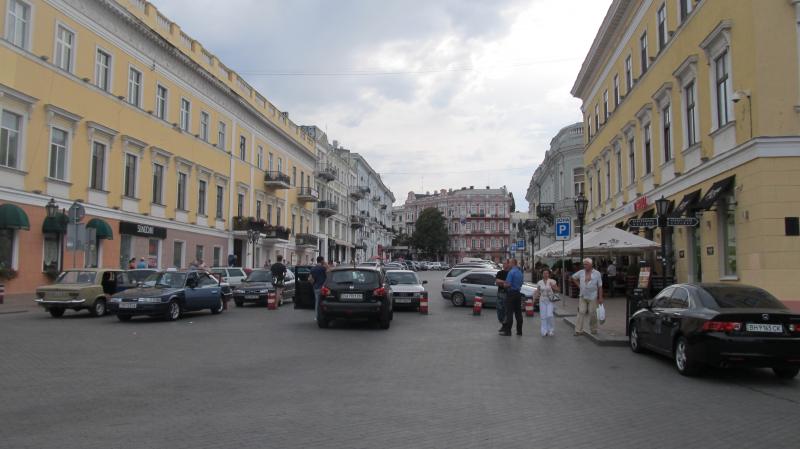 Straßenszene im Zentrum von Odessa mit historischen Fassaden, Fahrzeugen, Passanten und Außengastronomie.
Photo: daddy
Quick facts about restaurants in Odesa
- Forshmak is a herring dish of Jewish origin that is part of Odesa’s culinary tradition.
- Fried gobies, mussels and rapana sea snails draw on ingredients from the Black Sea coast.
- Tyulka bitochky are small fish cakes made from Black Sea sprats.
- Eggplant caviar, fried zucchini and stuffed fish round out the savory dishes.
- Privoz Market connects everyday food culture with shopping for fresh produce.
Odesa cuisine: fish, forshmak and vegetables
The city’s coastal location is reflected in dishes made with herring, Black Sea sprats, gobies, mussels and rapana. Fried gobies are served in crisp batter, while mussels are often brought to the table in a pot. Forshmak combines chopped salted herring with apple, onion, butter and lemon, and is usually eaten with dark bread. Tyulka bitochky are small fish cakes made from sprats.
The cuisine has also been shaped by several communities. Ukrainian, Jewish and Greek traditions influenced one another, alongside influences from Bulgaria, France, Italy and neighboring regions. Forshmak is served alongside stuffed pike and Ukrainian varenyky with cherries. In this way, the regional cuisine of Odesa brings together fish, vegetables and stuffed dishes.
Privoz Market and everyday food culture
Privoz Market is a distinctive place to understand how food, everyday market life and cuisine come together in Odesa. Privoz Market represents shopping and market culture; fresh fish and seasonal vegetables are part of the city’s culinary scene. Eggplant caviar with garlic and parsley, as well as fried zucchini with garlic mayonnaise, show how vegetable dishes sit alongside fish and stuffed dishes. In markets and cafés, shopping, short breaks and meals intersect.
The city’s architecture also sets the scene for a restaurant visit: historic streets, the boulevard and the market belong to different urban landscapes. Historic architecture provides a backdrop for a meal. When staying in the city, the location of your accommodation in relation to the market and restaurant routes is a practical factor to consider.
Choosing dishes by taste and occasion
Those who prefer fish can choose from several preparations, including gobies, mussels, rapana and forshmak, rather than just one “Black Sea dish.” Vegetable dishes such as eggplant caviar and fried zucchini offer a different focus. Stuffed fish and stuffed peppers represent more elaborate home-style and festive cooking; plums with walnuts under cream and Napoleon cake make for sweet endings. The regional selection reflects a range of culinary traditions, offering more than just a fish menu.
For directions and communication, offline maps and translations and essential words for everyday situations can help. Transfers and local transport determine how you get to the restaurant. A travel checklist with a schedule can allocate a separate block of time to the market, the meal and getting around. Payment options depend on the specific establishment; a card, cash and a backup payment method are useful to include in your travel preparations.
The airspace is closed, entry and exit are possible only by land, and local curfews may be changed at short notice.
Quiet escapes into nature can offer a counterpoint to a city itinerary during a future holiday.
Frequently asked questions about restaurants in Odesa
What is forshmak?
Forshmak is a dish made with chopped salted herring. One traditional Odesa version combines it with green apple, onion, butter, lemon, walnuts and hard-boiled egg; it is served with dark bread.
Which fish dishes are characteristic of Odesa?
Local options include fried Black Sea gobies, mussels, rapana sea snails and tyulka bitochky made from small Black Sea sprats.
How do different cultures shape the cuisine?
Ukrainian, Jewish and Greek influences come together in dishes such as varenyky with cherries, forshmak and stuffed pike.
