
Palanga: Beach, Pier and Seaside Resort on Lithuania’s Baltic Coast
Palanga lies north of Klaipėda and is Lithuania’s best-known seaside resort on the Baltic Sea. It is livelier than Neringa and is well suited to beach days, promenading, family holidays and short trips along the coast. If you are planning a trip through Lithuania, you can make it a destination in its own right or combine it with other stops in the Baltics.
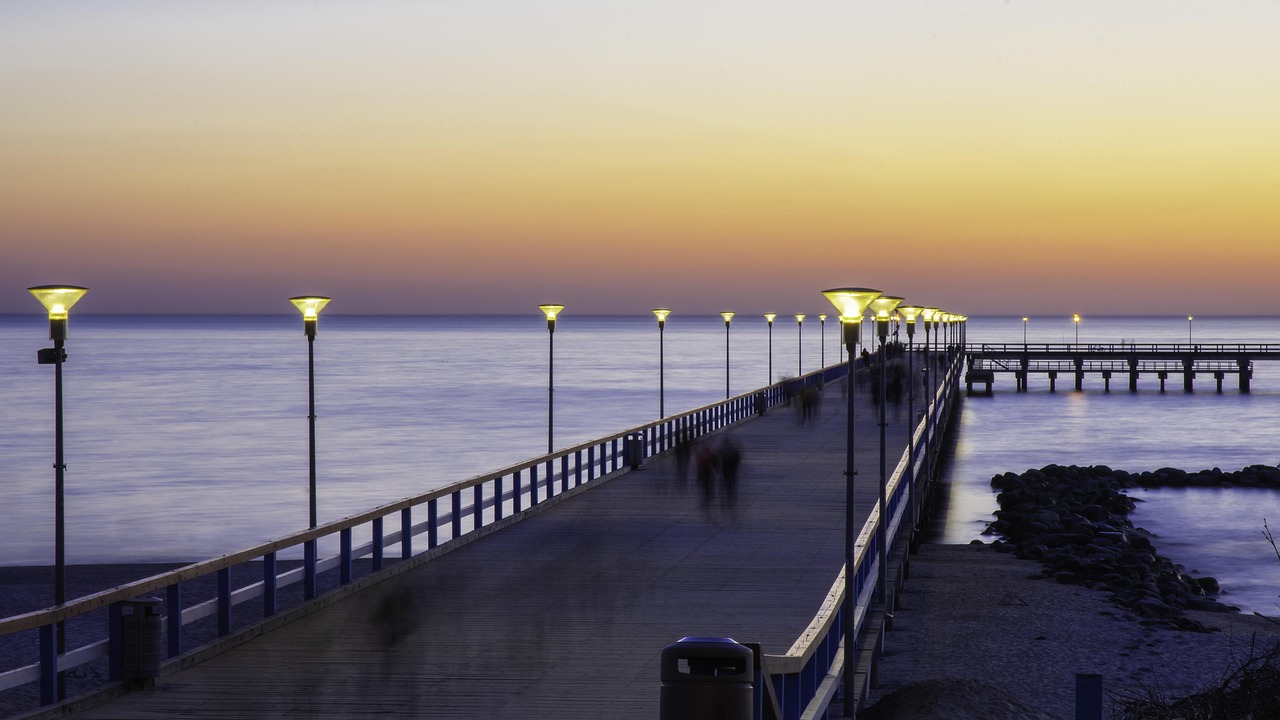 Palanga Seebrücke
Photo: Laura from Pixabay
Palanga Seebrücke
Photo: Laura from Pixabay
Palanga at a glance
- Palanga is on Lithuania’s Baltic coast, north of Klaipėda.
- The beach, pier, Basanavičiaus Street and the park surrounding the Amber Museum shape the town.
- In summer, Palanga is livelier and busier than during the quieter shoulder seasons.
- Klaipėda, Neringa, Nida and Juodkrantė each offer their own urban and natural highlights.
- Weather, beach access, opening hours and events all influence the day’s plans.
- Transport and accommodation are chosen according to the season, length of stay and the kind of coastal activities you have in mind.
Getting your bearings
Palanga: Beach, Pier and Seaside Resort on Lithuania’s Baltic Coast is a destination that is easy to plan without rushing. It is important to consider its location in relation to nearby towns, the railway station, the coast, the river, the lagoon or the national park. This quickly makes it clear whether a day trip is enough or whether an overnight stay would allow more flexibility.
When planning your route, it is worth looking at Lithuania, Klaipėda, Neringa, Nida, the Baltics, Estonia, Vilnius, Kaunas. Klaipėda, Neringa and the neighboring Baltic countries can be combined with suitable travel times.
What gives the town its character
Its character comes from its landscape, history and present-day uses. Palanga is about more than individual sights: it is also about paths, waterfronts, squares, parks and how a stay feels over the course of a day. It is especially helpful to get to know the central areas first, then plan excursions or longer walks.
- the long sandy beach, with dunes and a classic Baltic Sea atmosphere
- the pier, a popular place for a walk out over the water
- the Amber Museum in the park of the former Tyszkiewicz Palace
- Basanavičiaus Street, with restaurants, cafés and a lively summer scene
Many of the best impressions are made on foot. Short distances make it easy to connect historic areas, promenades, waterfronts and natural spots without constantly changing transport. If you are travelling by public transport, check the return journey early, especially outside peak season or when heading to smaller towns. In Palanga, departure points, transfers and return trips should therefore be planned around the day’s specific itinerary.
Planning your visit
In summer, coastal towns, seaside resorts and popular excursion destinations are considerably livelier. It is worth checking accommodation, ferry schedules and longer transfers well in advance. In spring and autumn, many places are quieter, but opening hours may be shorter and some tourist services may be paused. In Palanga, departure points, transfers and return trips should therefore be planned around the day’s specific itinerary.
For families, shorter stages make sense, since beaches, parks, museums and viewpoints often take longer than they appear to on a map. If you want to take photographs, hike or simply enjoy longer breaks, it is best to allow an extra half-day. On the Baltic coast and the Curonian Spit in particular, wind and weather can quickly change the rhythm of the day. In Palanga, the time of year should therefore be considered alongside trail conditions, opening hours and available daylight.
Connections to the surrounding area
Palanga combines easily with other places in the region. In Latvia, Riga, Jūrmala and Sigulda offer different experiences: city, coast and the Gauja landscape. In Lithuania, Klaipėda, Palanga, Neringa, Nida and Juodkrantė make a varied itinerary along the western coast.
If you have more time, you can combine your stay with Vilnius, Kaunas, Tallinn or other stops in the Baltics. For a first trip, a clear selection is often enough: a capital city, a coastal destination and a nature area or seaside resort. In Palanga, the route should take account not only of what you want to see but also of trail conditions, weather, daylight and a safe return.
Practical information
The best time to visit depends on what you want to do. June to August is most pleasant for beach days and long evenings. May, September and often early October are appealing for sightseeing, spa stays, museums and quiet walks. In winter, many places are quieter, but can still be suitable for culture, wellness or a short city break. In Palanga, the time of year should therefore be considered alongside trail conditions, opening hours and available daylight.
Location matters more than distance alone when choosing accommodation. Staying near the railway station, ferry, promenade or old town saves time and makes it easier to take spontaneous breaks. If you are travelling by car, check parking options in advance, especially in seaside resorts and protected areas. The Curonian Spit also has ferry and protected-area regulations to consider. In Palanga, accommodation location should be weighed against the main routes you plan to take each day and realistic opportunities for breaks.
Planning a trip to Palanga on Lithuania’s Baltic coast
Palanga is one of Lithuania’s best-known seaside resorts, combining a beach, pier, parkland, Amber Museum and lively summer resort life. Visitors should bear in mind the strong seasonality: the atmosphere, prices and crowds vary considerably depending on when they travel.
A good plan includes beach days, walks, trips to Klaipėda or the Curonian Spit, and weather-proof alternatives. This makes Palanga more than just a beach destination and helps visitors appreciate it as a Lithuanian Baltic town with a history of its own.
Palanga is particularly well suited to travelers who want to combine Baltic beaches, a pier, a park and resort life with good visitor infrastructure. Comparing it with Nida and Juodkrantė highlights the difference between a livelier seaside resort and the quieter landscapes of the spit. Klaipėda works well as a city stop, while Neringa calls for a dedicated nature and coastal visit.
When planning a visit, consider the season, accommodation, beach access, weather, opening hours and the routes between the park, museum and coast. During peak season, allow for crowds and traffic; outside summer, some attractions may have shorter opening hours. Getting there and getting around, Trip planning and Culture and history can help you choose a focus that leaves enough time for breaks.
Conclusion
Palanga is a worthwhile stop on a trip through Lithuania: it has a distinct character of its own and is also easy to combine with nearby destinations. The visit is most rewarding when you avoid cramming too many stops into one day. That leaves time for walks by the water, brief museum visits, café breaks and the quieter side of the Baltics.
Combining the beach, park and coastal towns
A day in Palanga can be divided between the beach, pier, Basanavičiaus Street and the park with its Amber Museum. Walks by the water and indoor visits complement one another when you take the weather and opening hours into account. During peak season, crowds, parking and accommodation availability should be factored into your plans early. Palanga is on Lithuania’s Baltic coast and can be combined with other coastal destinations according to the season, location and travel time. Additional information about Lithuania can help with practical preparations. Klaipėda works well as a city stop, while Neringa, Nida and Juodkrantė are destinations on the Curonian Spit. Vilnius, Kaunas and Riga make good additional stops, but each requires its own travel time.
For a specific route, combine getting there and getting around, trip planning and nature and landscapes. Lithuania Travel provides information about Palanga and other destinations. Check the weather, opening hours, events and transport conditions again before your visit.
Palanga FAQ
What is Palanga known for?
Palanga is Lithuania’s best-known seaside resort, associated with Baltic beaches, a pier, the Amber Museum, a park and resort life.
How much time should I allow?
One day is enough for the beach, pier and a first walk around the park. Two or more days leave time for the museum, breaks and coastal excursions.
Can I combine Palanga with Klaipėda or Nida?
Yes, provided the transport connections, ferry or road routes and return journey fit your stay. Neringa and Nida should be planned as separate landscape-focused stops.
When is Palanga especially lively?
Expect more activity in summer and on event days. Check accommodation, traffic, weather and opening hours for your specific travel dates.
