
Mostar: Stari Most, the Neretva, and travel planning in Herzegovina
Mostar is best explored on foot: the Neretva divides the city, the Old Bridge connects its banks, and narrow streets lead into the historic center. The original stone bridge was completed in 1566; its history is part of the city’s development along the Neretva. A walking tour is more rewarding when it goes beyond the famous view of the bridge.
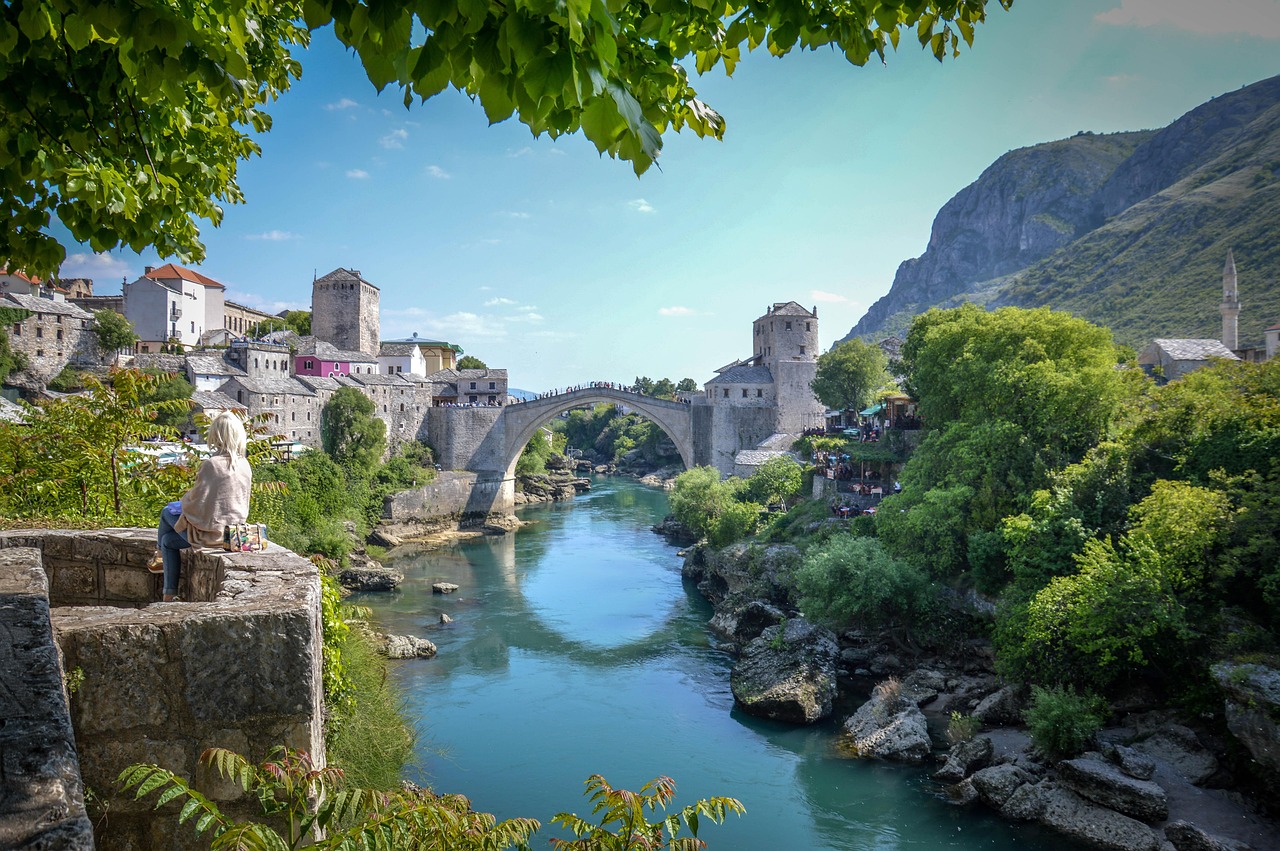 Die Brücke von Mostar ist ein Symbol für den Wiederaufbau nach dem schrecklichen Bürgerkrieg. Nach einer Legende wird ein Junge in Mostar erst nach einem Sprung von ihr zum Mann.
Photo: Igor Paradzik from Pixabay
Mostar at a glance
- Mostar lies in Herzegovina, on the Neretva River.
- Stari Most, the Old Town’s lanes, the bazaar, and the riverbanks form the main walking route.
- Stone paths, steps, and bridge crossings call for sturdy shoes and time.
- The stone bridge was built in 1566 under Sultan Suleiman.
- Blagaj and Počitelj are outside the center and make separate excursions.
Stari Most: architecture and memory
Stari Most was completed in 1566 during Ottoman rule. The name Mostar refers to the guardians of the Neretva crossing, the mostari. The bridge helped a commercial and residential center develop on both banks. The connection between the river crossing and the Old Town shapes the city’s historic landscape.
As you walk across the bridge, its steep arch and the difference in height between it and the riverbanks stand out. Along the Neretva, the views of the bridge and Old Town keep changing. At peak visiting times, crowds and photo stops make crossing take longer; allow extra time if you plan to linger by the river.
The Old Town and riverside paths
The walking route leads from the bazaar area down to the bridge, across the Neretva, and back through the lanes on the opposite bank. Cobblestones and steps are part of the route. In warm weather, mornings, breaks in the shade, and water are helpful. The lanes and historic homes and commercial buildings take the walk beyond the bridge area and through the rest of the Old Town.
You can put together a walking tour between the bazaar, bridge, and riverbanks; set aside a separate block of time for a museum or another historic building. Mostar is in Bosnia and Herzegovina. If you plan to visit other historic sites beyond the Old Town, combine your walk with places focused on culture and history.
Excursions to Blagaj and Počitelj
Blagaj and Počitelj are excursion destinations outside central Mostar. Plan a separate outbound and return journey for each, as well as time at the destination; if you’re traveling without a car, include the return journey in the same day’s plan.
Where you stay depends on your daily routine: in the center, the Old Town and bridge are within walking distance, while staying farther out means extra travel. To stay near the walking route, choose accommodation in Mostar. For comparisons with other cities, consider Sarajevo and Banja Luka.
Including Mostar in a Balkan itinerary
Mostar is a highlight of a cultural trip through Herzegovina. The Balkans encompass varied landscapes and travel legs; border crossings and long drives rarely fit into the same day as sightseeing in a city. Dubrovnik can be combined with Herzegovina, but because of the border crossing and travel time, it needs its own leg of the trip.
Albania, Montenegro, Croatia, and Slovenia are other distinct legs of a trip. For planning, see getting there and getting around, travel preparation, money and payments, language and communication, and staying safe while traveling. Nature and landscapes complements the cultural sites with river valleys and karst terrain.
Start your walk at Stari Most, then follow the lanes and the Neretva riverbank. For the journey to the city center, consult getting there and getting around; before setting off, also plan travel preparation, money and payments, and language and communication to suit your route. On the walk, breaks and sturdy, slip-resistant shoes make steps and uneven cobblestones easier to manage; you can also factor advice on staying safe while traveling into your day’s plans. If you extend your day in the city, combine it with culture and history or a stay amid the nature and landscapes of Herzegovina.
From the riverbank, Mostar and the course of the river come into view together. Sarajevo, Banja Luka, and the Balkans offer different travel legs to explore. Dubrovnik is a possible onward stop across the border.
Frequently asked questions about Mostar
When was Stari Most destroyed and reopened?
The bridge was destroyed on November 9, 1993. After reconstruction, it reopened on July 23, 2004.
How much time should I allow?
A full day is enough for the bridge, a walk through the Old Town, and a break by the river. An overnight stay makes for a more relaxed visit if you’re adding a museum or an excursion to Blagaj or Počitelj.
What should I keep in mind on the walking tour?
Stairs, uneven stones, heat, and crowds can make the route take longer. Sturdy shoes, water, and time for breaks make the visit easier.
What is the history of Stari Most?
The stone bridge was built in 1566 during the Ottoman period. Its history links the city’s development with trade and the Neretva crossing; its postwar reconstruction shapes its significance today.
Can Blagaj and Počitelj be visited on the same trip?
Yes, with your own transport or a well-coordinated connection. Plan travel time, time at each destination, and the return journey together as part of the day.
