
Shopping in Moscow: Department Stores, Markets, and Districts
Shopping in Moscow ranges from historic department stores and modern shops to markets. GUM on Red Square opened in 1893 as the Upper Trading Rows; the building’s history combines commerce and architecture in the city center. Today, GUM is a department store with shops and dining. For a shopping day, choose a district based on the goods you are interested in and its location.
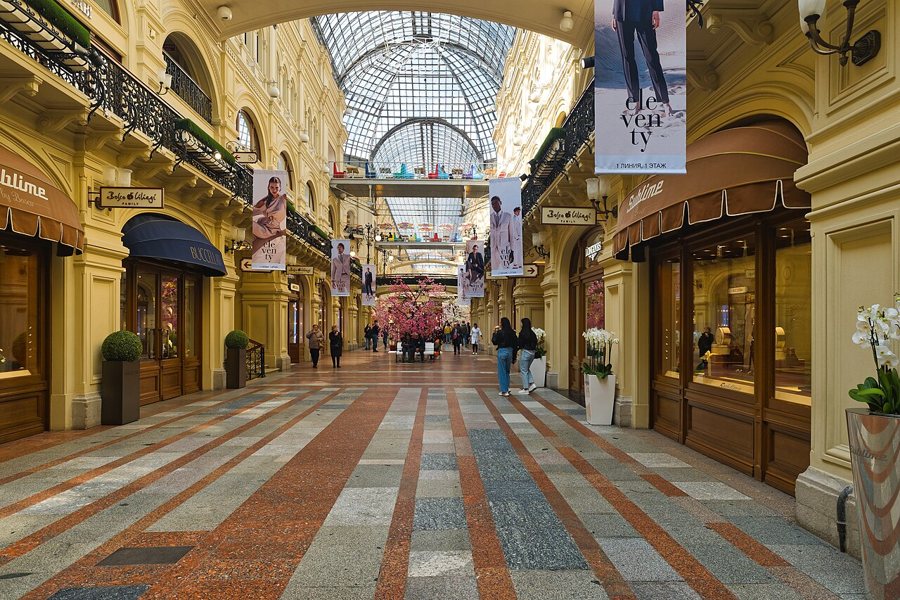 Einkaufspassage im Moskauer GUM (2024). Foto: Alexxx1979 / Wikimedia Commons, CC BY-SA 4.0. Verkleinert.
Photo: Alexxx1979
Quick facts: Shopping in Moscow
- GUM and TSUM are both in the city center, but differ in location and range of goods.
- Specialty shops offer specialized products and personal advice; what markets sell varies by season, type of goods, and vendor.
- Souvenirs can be compared by origin, material, price, and ease of transport.
- For food, consider packaging, refrigeration, and the planned return journey.
- Export and import rules for works of art and natural materials depend on their origin and the applicable regulations.
- Large shopping centers take extra time to get around and pass through security checks.
- According to the German Federal Foreign Office, German bank cards, German payment apps, and cash withdrawals using German cards do not work in Russia.
Historic department stores in the city center
GUM is located on Red Square and brings together shopping arcades, a glass roof, and shops in a historic building. GUM’s official information lists fashion, jewelry, cosmetics, household goods, and dining. The Kremlin borders Red Square; unusual places in Moscow also shape the impression of the city center.
TSUM is on Petrovka Street and, together with GUM, forms another major department-store destination in the city center. The two stores differ in location and range of goods. Prices, materials, sizes, and return terms are shown on each product and at the checkout. For a compact route through the city center, a department store can be combined with Red Square and the Kremlin.
Markets, food, and souvenirs
Markets vary in the goods they offer and their locations; depending on the market, the selection may include food, spices, or everyday items. Compare prices, origin, and packaging directly on the products for sale. Respect the privacy of vendors and customers when taking photographs. A visit to a market offers a glimpse of everyday trade and complements department stores with a different shopping experience.
Souvenirs can be chosen based on origin, material, price, and ease of transport. For works of art and natural materials, your own import requirements are decisive; food is also subject to the rules of the destination country and the relevant mode of transport. On the Arbat, shops and street life mingle among historic facades; other parts of the capital are shaped by unusual places in Moscow.
Shopping centers and modern districts
Modern shopping centers bring together shops, dining, services, and entertainment. Their locations near metro stations are convenient, but the buildings are often so large that even a short visit can quickly turn into a half-day outing. For families, restrooms, places to take a break, and the return journey may matter more than the number of shops.
You can explore Moscow district by district while shopping. Around Red Square, the grand central area takes center stage; on the Arbat, strolling and shopping go hand in hand, while other centers are located mainly in modern residential or business districts. The city’s museums and a walk along the Moskva River are good alternatives for companions who do not want to shop. Saint Petersburg is another Russian metropolis with its own urban and commercial history.
Prices, returns, and trip planning
When choosing accommodation, consider the location of your shopping destination, metro connections, and the return journey as part of your travel plans.
According to the German Federal Foreign Office, Visa and Mastercard cards issued in Germany, German payment apps, and cash withdrawals using German cards do not work in Russia. Prices and accepted payment methods vary from shop to shop. If you are continuing your journey by train, consider the Moscow railway stations and how to get to your departure point; the location of your hotel in Moscow also affects connections to the shopping district.
Different import rules apply to food, medicines, alcohol, tobacco, and works of art, depending on the type of goods and the destination country. On a longer trip through Russia, you can combine Moscow with other regions. Your choices and luggage should comply with applicable transport and import regulations. Hotels in Moscow are chosen according to the shopping district and the return journey. Moscow’s airports are important arrival and departure points.
Bringing department stores, markets, and city routes together
A shopping day can be planned by district: GUM and the Kremlin are on Red Square, while other shopping centers require a separate trip. Moscow is spread out; for journeys beyond the city, Russia provides the wider context. GUM combines shopping arcades and dining with a central route through the city center.
When shopping, consider price, origin, material, size, and the specific return or warranty terms. Choose food based on its packaging, refrigeration needs, and planned transport. Moscow’s shopping traditions sit alongside the city’s cultural attractions; culture and history shape many sightseeing routes. Saint Petersburg and the Ural Mountains are other distinct travel destinations.
For trips between shopping districts and your accommodation, consider metro connections and the return journey; the route is part of getting to and around the city. Personal travel preparation includes luggage and the documents you need. Entry requirements depend on your nationality and the purpose of your trip. Clear product information and clear agreements help when shopping; language and communication are useful. In busy areas and on the way back, safety precautions are sensible. German bank cards and payment apps, as well as cash withdrawals using German cards, do not work in Russia; when it comes to money and payments, it is therefore important to have alternatives available.
Frequently asked questions about shopping in Moscow
When did the Upper Trading Rows open?
GUM opened on December 2, 1893, as the Upper Trading Rows on Red Square.
Which payment methods work for travelers from Germany?
According to the German Federal Foreign Office, German Visa and Mastercard cards, German payment apps, and cash withdrawals using German cards do not work in Russia.
What should you look for in a souvenir?
Origin, material, price, craftsmanship, and ease of transport help you compare items. Your choice depends on your personal interests and the luggage space available.
How much time does a shopping day take?
A department store and a nearby area can fill half a day or a whole day. Allow for travel time, traffic, and breaks rather than trying to fit too many large centers and markets into one day.
What payment and return rules apply?
Payment methods, returns, and warranties depend on the store and the purchase; keep the receipt and check the specific return terms for each purchase.
